



- Women now account for nearly 36% of India’s technology workforce, marking steady progress in IT representation.
- The leadership gap persists, with women holding only a small share of executive technology roles despite strong career aspirations.
- AI is creating new pathways for leadership in governance, ethics, risk management, and responsible innovation.
- India leads globally in enterprise AI adoption, but AI governance frameworks are still evolving.
- The next generation of women leaders is expanding influence beyond CIO and CTO roles into boardrooms, policy, and entrepreneurship.
- True progress will be measured by women shaping technology decisions, not just participating in the workforce.
- Inclusive leadership today will determine how responsibly and effectively AI transforms business tomorrow.
How Women are Redefining India’s IT Landscape
Picture two rooms, twenty years apart, in the same Indian technology company. In the first, sometime in the early 2000s, a project kickoff is underway. The architecture is being decided by a handful of engineers around a whiteboard; the one woman in the room has been quietly assigned to “coordinate with stakeholders.” Nobody said she couldn’t design systems. Nobody needed to. The assumption did the work on its own.
In the second room, this year, an AI governance committee is meeting to decide whether a new model can be deployed into production. The person chairing it is a woman. Nobody in the room finds that remarkable enough to mention. What they do find remarkable is her question: not “can we ship this,” but “what happens the first time it’s wrong, and who is accountable when it is.” The room goes quiet, then gets back to work, on her terms.
That second room is not yet the norm across Indian enterprises. But it exists often enough now, in enough boardrooms and governance councils, that it is no longer an anomaly worth a headline. I think that shift from being managed around, to setting the terms of the conversation is the real story of how women are redefining India’s IT landscape. It didn’t happen through a single dramatic breakthrough. It happened through years of unglamorous, undeniable competence that eventually became impossible to ignore. But I also believe we should resist the temptation to declare victory. The numbers tell a more layered story than the panel discussions usually allow.
The Workforce Has Widened. The Ladder Hasn’t.
Start with the base of the pyramid, and the picture looks genuinely encouraging. Women now make up roughly a third of India’s technology workforce, NASSCOM has put the figure at around 36 percent, and independent hiring-platform data from foundit’s Women in the Indian Workforce 2026 report shows women’s share of IT job postings climbing from 32 to 34 percent in a single year, with representation in data and analytics roles nearly rising from 7 to 10 percent over the same period. Global Capability Centres, in particular, are driving this: TeamLease Digital projects women will make up close to 35 percent of the GCC tech workforce by 2027, up sharply from just over a fifth a few years earlier.
Look one level up, and the pipeline visibly narrows. Skillsoft’s Women in Tech research for the India region found that only about 7 percent of executive-level positions in tech are held by women, with 13 percent at director level and 17 percent at mid-management. A 2026 KPMG India-AIMA survey found a similar pattern industry-wide: nearly four in five women professionals aspire to leadership roles, yet only around one percent currently sit on boards, and close to half of surveyed organizations still have less than a third of their leadership positions held by women. In financial services specifically, women make up a healthy share of entry-level hiring but their presence collapses to roughly 13 percent by the C-suite.
There is real progress worth naming, too. Government data compiled in the Women and Men in India 2025 report shows women now hold 28.7 percent of all company directorships nationally, nearly a million women on boards, across listed and unlisted companies combined. Among NSE main-board listed companies specifically, Prime Database’s March 2026 tracking shows 98 percent now have at least one woman director, and 47 percent have two or more, up from just 35 percent in 2021. That is a genuine, decade-long structural shift – India’s boardrooms went from 6 percent women in 2013 to over 20 percent today. But the same data shows women hold only about 17 percent of senior management positions, the layer just below the board, where operational P&L authority actually sits, and where technology leadership is decided. Boards are opening faster than the C-suite beneath them.
I share these numbers not to be discouraging. I share them because CIOs and CTOs are precisely the people with the authority to decide whether the next rung narrows again the way it always has, or whether it finally holds.
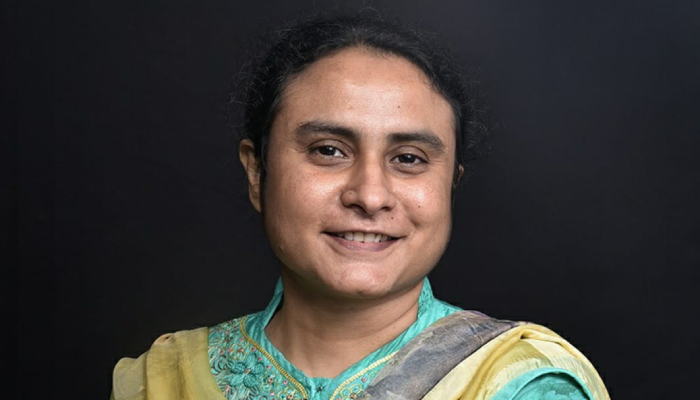
“The future of technology leadership will not be defined solely by who builds AI, but by who governs it responsibly. Women leaders across India’s IT ecosystem are moving beyond participation to influence, shaping strategy, ethics, and innovation at the highest levels. As AI reshapes industries, this is an opportunity for organizations to ensure leadership pathways are as inclusive as the technologies they create.”
– Varundeep Kaur, Chief Information Officer, AIPPL
Why AI Is Changing the Terms of Conversation
Here is what I find genuinely different about this moment compared to the diversity conversations of a decade ago: AI has become something of a leveler in enterprise technology, and not for sentimental reasons.
Deloitte’s 2026 State of AI in the Enterprise research found that Indian enterprises report “significant or full” AI usage at roughly 40 percent, well above the global average of around 28 percent, and rank first globally on how actively AI now informs strategic decision-making. Adoption is heaviest in product development, at-scale in roughly six in ten surveyed enterprises, followed closely by strategy and operations. This is no longer a pilot-project story confined to innovation labs; it is embedded in the functions that drive growth.
But a separate CII–Protiviti study, presented at the AI India Show in 2025, found that while 59 percent of Indian enterprises consider themselves moderately or fully prepared to integrate AI, only 23 percent have actually implemented AI ethics and governance frameworks. Regulatory and compliance uncertainty is now cited as the single biggest AI integration challenge, ahead even of cost or infrastructure constraints. More than a third of surveyed executives now believe the right structural answer is a dedicated Chief AI Officer role, a title that, unlike “CIO” or “CTO,” does not yet carry two decades of inherited assumptions about who fills it.
That gap between adoption enthusiasm and governance readiness is, in my view, exactly where ambitious women in Indian technology are positioning themselves. Not because governance is a “safer” lane, but because it is the lane that will determine whether any of this AI investment survives contact with regulators, auditors and the public. Research published in the International Journal of Artificial Intelligence in Education has found that more diverse teams are measurably better at surfacing ethical blind spots and weighing downstream consequences before deployment precisely the capability every enterprise now needs and few have built.
What Ambition Looks Like from Here
I want to be candid about something rarely said aloud at conclaves: ambition, for women in Indian technology, has had to be redefined twice already. The first redefinition was proving that ambition and competence were not incompatible with also being a wife, a daughter, a mother managing an aging household. The second, unfolding now, is proving that ambition need not stop at the CIO or CTO title.
I have watched capable women reach the technology summit of a single organization and then quietly ask: now what? Increasingly, the honest answer is that the next chapter of ambition lies beyond any one company’s org chart in shaping AI governance standards at industry-association or state-council level, in mentoring the cohort behind us, in building ventures that embed responsible-AI principles from day one rather than retrofitting them after a regulatory notice. There is no quarterly performance review for that kind of work. I would argue it is the more consequential kind precisely because of that.
A Concluding Note
Every statistic in this piece describes an industry still under construction, not a finished house. Nearly 90 percent of women professionals say GenAI is now central to their own career growth ambitions, per Nasscom-BCG research, at a moment when India’s AI market is projected to grow at a 25–35 percent compound rate toward $320–380 billion by 2027. The appetite is there. What determines whether that appetite converts into leadership representation ten years from now is being decided in rooms exactly like the one this book will be read in.If I could leave every CIO and CTO holding this page with one thought, it would be this: the rules for how India governs enterprise AI are still being written, and the people writing them will disproportionately shape outcomes for the next decade of Indian technology. That drafting table has room for more names than it currently has. The most useful thing any of us can do, man or woman, incumbent or aspirant is decide, deliberately, who gets pulled up to it next.