



- AI and automation will power Keralam’s next industrial revolution.
- Diaspora wealth must be converted into AI-driven investment and innovation.
- The future lies in selling outcomes and intellectual property, not billable hours.
- AI-led modernization of legacy systems is a major economic opportunity.
- Trust, cybersecurity, and governance can become Keralam’s global competitive edge.
Keralam’s journey from a service-led economy to an AI-driven innovation hub will depend on scaling automation, attracting diaspora-backed investment, modernizing legacy systems, and building globally trusted digital businesses focused on outcomes rather than billable hours.
Keralam never had a smokestack revolution. Other states built steel plants and textile clusters; we built literacy, public health and a habit of sending our people abroad. The result is an economy that turned post-industrial before it was properly industrial: services were 63.45 per cent of Gross State Value Added in 2024-25, and GSDP is projected at ₹16.29 lakh crore this fiscal. That is at once our greatest asset and our greatest exposure – and why AI will not be a mere technology upgrade here.
Automation out of necessity
Keralam’s businesses adopted IT early, and not out of enthusiasm for technology. Scarce land, costly organised labour, a small home market and literate, unforgiving customers left automation as the only route to scale. The telecom revolution of the 1990s was the trigger: once connectivity became cheap, a Keralam company could serve a national market from a Keralam head office. The gold-loan NBFCs prove it – the largest crossed ₹1 lakh crore in assets under management in March 2025, thousands of branches running standardised, centrally controlled processes.
Four revolutions in one career
I have spent my working life in the capital market, and the sequence there is the clearest illustration I know. When I began, prices were discovered by open outcry on a trading ring and settlement moved as physical certificates. Screen-based trading replaced the ring; because terrestrial links were unreliable, brokers reached the exchanges over VSAT, and a dish on the roof of a small-town office put a Kochi member on the same screen as one in Mumbai. Dematerialisation removed the paper. Internet trading at the turn of the millennium moved the terminal to the investor’s desk, and mobile moved it into the pocket, where UPI, e-KYC and video verification now open an account in minutes.
Each step eliminated a whole category of work – jobbers, transfer clerks, dealing-room staff – and each was followed by a market several times larger. Automation here has widened participation rather than shrunk employment.
The non-resident dimension, and a proposal
No account of our economy is honest without the diaspora. The Keralam Migration Survey 2023 put annual remittances at ₹2,16,893 crore, up 154.9 per cent from ₹85,092 crore in 2018 – 23.2 per cent of net state domestic product and 1.7 times revenue receipts – and the state holds 21 per cent of India’s NRI deposits. But we became very good at exporting talent and importing money, and much less good at turning the proceeds into productive risk capital.
The AI transition is capital-intensive, and that is where the two facts meet. Keralam should build an AI business cluster capitalised substantially by non-resident Keralites: a state-anchored fund of funds with diaspora participation, deploying into shared compute, domain data infrastructure and firms building applied AI for banking, health, logistics and agriculture. A large part of that diaspora now works in technology, and brings customers and judgement as well as money. It has funded Keralam’s housing stock for fifty years; the question is whether it will fund Keralam’s compute. Two conditions decide that – a credible exit and governance the investor trusts – and neither is a technology problem.
“Keralam’s next industrial revolution will not be powered by smokestacks, but by AI, automation and trust. The real opportunity lies in turning our educated workforce, global diaspora and digital maturity into innovation, intellectual property and sustainable economic growth.”
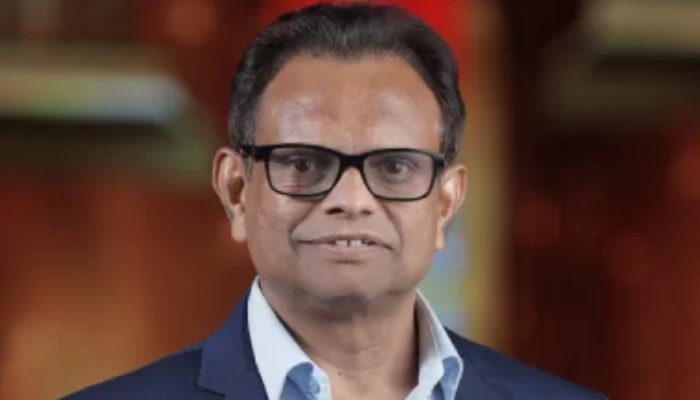
Mr. A. Balakrishnan, Former Executive Director, Geojit Financial Services Limited
What the parks built, and what remote work adds
Technopark, Infopark and Cyberpark did what policy documents rarely do: they created a labour market. Between 2016 and 2025 IT companies in Keralam roughly doubled to nearly 1,200, employment rose from around 70,000 professionals to about 2.6 lakh, and export earnings from roughly ₹9,000 crore to ₹26,770 crore; the startup base grew from 4,681 ventures to 6,227 in a single year. Keralam has around 45 Global Capability Centres and targets 150 by 2031 – the right ambition, since a GCC is the parent’s own engineering capacity, precisely the work AI makes more valuable, not less.
Distributed work has quietly changed the geography of all this. An engineer can live in Thrissur and be paid from Zurich; a GCC can hire in Kochi before it builds in Kochi. That makes our advantages liquid – liveability, low attrition, a workforce that need not migrate to be employed – and it opens a reverse flow of experienced Malayalis who will return if the work follows them. The state’s role is unglamorous: power, bandwidth, housing, schooling, airports, urban quality. In a distributed labour market, those are industrial policy.
Governance and skills
Our public digital infrastructure is a real asset: Though it has teething troubles, KFON had 1.13 lakh active connections as of August 2025, 2,986 Akshaya centres deliver e-services and employ over 10,500 people, and e-SEVANAM offers 500-plus services across 50 departments. Digitisation moved paper onto screens; AI must now move decisions. Welfare targeting, land records and tax administration can each be made faster and fairer with machine assistance – provided audit trails, appeal routes and data protection are built alongside.
The Knowledge Economy Mission aims to upskill 30 lakh people and create 20 lakh jobs, and the Digital University and the Science Park at Technocity are sound bets. But private R&D spending is thin, patent output modest, and industry-academia collaboration episodic. Two fixes matter more than new schemes: secondment of engineers into classrooms and faculty into companies, and curricula built around what AI does not automate – problem framing, domain judgement, data quality, verification, ethics. A graduate who can prompt a model is not thereby employable; one who can tell when the model is wrong certainly is.
The threat to time-and-materials
Now the uncomfortable arithmetic. Keralam’s IT exports of about Rs 26,770 crore are close to two per cent of India’s software exports, and much of that is billed by effort. AI attacks the billable hour directly: code generation, testing, support and first-level analysis are where the gains are largest. If a firm’s pitch is the same work as Bengaluru at 30 to 40 per cent less, that arbitrage disappears within a few years. What we can defensibly offer is vertical depth – banking and capital market operations, healthcare, marine and agri supply chains, the logistics economy around Vizhinjam – sold as outcomes and intellectual property rather than hours. That is a change of business model, not of technology stack, and by far the harder one.
Clearing the technical debt
There is a quieter opportunity that receives almost no attention. Our established institutions – banks, NBFCs, co-operatives, hospitals, insurers, government departments and the older IT firms themselves – carry decades of technical debt: undocumented systems, spreadsheets doing production work, business rules surviving only in the memory of two people near retirement. Modernisation stayed uneconomic because understanding the old system cost more than tolerating it. AI changes that arithmetic: models read legacy code, reconstruct documentation, generate tests that pin existing behaviour and support migration module by module. Every economy carries the same burden, so the capability we build clearing our own debt is exportable – and modernisation is a far stickier engagement than staff augmentation.
Health, Ayurveda and tourism
Tourism opens a second frontier. Keralam recorded 2.58 crore tourist visits in 2025, its highest ever, on revenue of about Rs 45,053 crore in 2024, while wellness and medical value travel earned roughly Rs 13,500 crore, up from Rs 10,800 crore, with accredited Ayurveda centres for international guests rising from 460 to 550. Ayurveda’s constraint abroad is not demand but evidence and standardisation, and AI suits that problem: outcome data across thousands of treatment episodes, protocol standardisation, personalised regimens, interaction screening. With our hospital density we can sell managed health outcomes rather than treatment packages. The elderly were about 16.5 per cent of the population by 2021 and rising, making remote monitoring and geriatric care a domestic market large enough to build export products on.
Sustainability and security
AI is power- and water-hungry. Any data centre or GCC ambition must be planned alongside renewable capacity, cooling efficiency and disaster resilience – a state that lived through the 2018 floods needs no persuasion. Green campuses and verified energy sourcing are not public relations; GCC parents audit them.
Nor does any of this survive a security failure. CERT-In recorded about 20.4 lakh cyber security incidents in India in 2024, and roughly 28.15 lakh cybercrime cases were reported in 2025 with losses near Rs 22,495 crore, over three-quarters to investment fraud. SEBI’s Cyber Security and Cyber Resilience Framework, the RBI’s IT governance directions and the data protection regime have moved cyber risk to the boardroom. AI raises the stakes both ways: deepfakes and automated social engineering are already in use against Indian consumers, while defenders gain far better anomaly detection. Security here is not only a control requirement but a market Keralam should build – because what we finally promise a global client is trust.
What the next revolution asks of us
Keralam’s next industrial revolution will not have chimneys. It will be measured in decisions per second rather than tonnes per day and will rest on what we already hold in surplus: educated people, a global network, institutional trust. Four imperatives follow – convert diaspora wealth into domestic risk capital through a genuine AI cluster; sell outcomes and intellectual property rather than effort; clear our own institutions’ technical debt before selling that capability abroad; and make verifiable trust our commercial signature, not a compliance overhead.The rest is execution. Keralam has spent thirty years proving it can absorb technology; the question this decade puts to us is whether we can finally monetise it.