



In the age of AI, the CIO’s role is no longer just about transforming the business. It is equally about transforming oneself, developing the judgment, resilience, and adaptability needed to lead when technology advances faster than traditional leadership models.
In February 2024, Klarna’s CEO stood up and said something that made every CIO in the room lean forward. Their new AI assistant, he announced, was doing the work of 700 full-time customer service agents. 2.3 million conversations handled in a single month. Resolution time down from eleven minutes to under two. Klarna held it up as proof of what enterprise AI could really do, and for a while, the rest of the industry agreed with him. It became the case study everyone was quoting at every conference, mine included.
Fifteen months later, the same CEO said something very different. The AI push, he admitted, had “gone too far.” Customers were frustrated. Complicated problems weren’t getting solved by a bot that didn’t know when to stop being a bot. Quietly, through 2025, Klarna started hiring people back.
Here’s the part I find genuinely interesting about that story, and it’s not the part most people focus on. This isn’t a story about AI failing. The AI did exactly what it was built to do: it was fast, it was cheap, it closed millions of tickets. This is a story about strategy failing to keep pace with technology. A company that scaled its innovation faster than it scaled its judgment about where a human being still needed to be in the loop.
That gap, between what AI can now do and what a leader decides it should do, is where I think every CIO in this community now lives. And I don’t think we’ve been talking about it honestly enough.
Two jobs, not one
Somewhere along the way, I stopped thinking about AI strategy as one job and started thinking about it as two. There’s the professional mandate: driving growth, resilience and innovation for the business you run. That’s the one every panel discussion is built around, mine included, until recently. But there’s a personal mandate sitting right next to it, just as demanding and far less discussed: driving your own growth, resilience and innovation as a leader, inside a job that’s changing faster than most of us can keep up with honestly.
I’ve come to believe you can’t get the first one right if you’re quietly avoiding the second. So let me walk through both, because I think Klarna’s story is really about the second one wearing thin before anyone noticed.
Growth means judgment now, not knowledge
For most of my career, a CIO’s value was tied to how much you knew, the depth of your technical command. That’s changed, and it changed faster than any of us expected. The technical answer is a single prompt away for almost anyone in your organisation now, junior or senior. So what actually differentiates you? Not what you know anymore. It’s the judgment you bring to trade-offs nobody else in the room is positioned to see, and the quality of the questions you’re willing to ask out loud. Personal growth today means putting as much energy into strategic and business fluency as you once put into technical depth. If the last two years of your own learning were mostly about tools, that ratio needs to shift, and it needs to shift soon.
“The CIO job hasn’t been replaced by AI. It has split in two: one part shaping the future of the enterprise, the other continuously reinventing the leader behind it.”
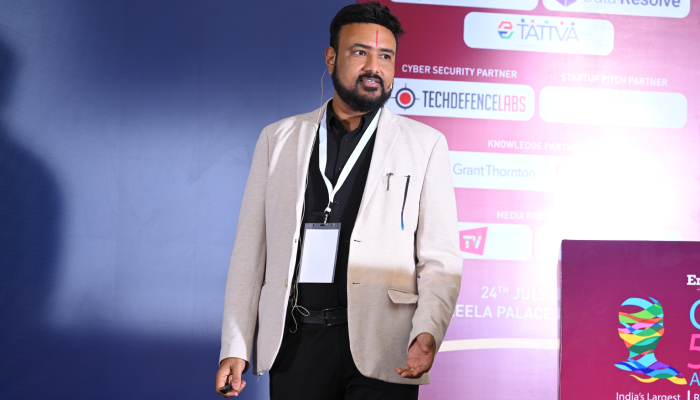
Dr. Vivek Khare, Vice President – IT, Oak Tech Solutions
On the business side, growth runs into the same trap Klarna fell into. If you’re using AI purely to speed up a process you already have, you’re not redesigning anything, you’re just running the old model faster, and you’ll likely hit the same wall they did. Redesign instead of automating. Redesign to actually scale. Redesign to stay relevant to your customer. Redesign in a way that keeps a human touch somewhere in the loop, because that’s usually the part that goes missing first.
Resilience is staying anchored, not working harder
Personal resilience in this era isn’t about grinding harder through the disruption. That’s a losing strategy against a pace of change this relentless, and I’ve watched good people burn out trying it anyway. Real resilience is about staying anchored while the ground underneath you keeps moving. It’s being genuinely comfortable telling your board “I don’t fully know yet,” without that costing you the room’s confidence. The CIOs who keep their seat over the next decade won’t be the ones who know more than the AI sitting on their desk. They’ll be the ones whose judgment it simply can’t replace.
Enterprise resilience follows the same logic, just at scale. It means building the guardrails before the crisis, not writing them afterward as an apology to your board or your customers. Decide in advance which decisions your organisation is comfortable letting AI make on its own, and which ones must always keep a human escalation path, before a customer complaint, a regulator, or a headline makes that decision for you instead.
Innovation means being a beginner in public again
This is the one I feel most strongly about, because I’ve lived it rather than just talked about it. Personal innovation means being willing to be a beginner again, in front of people who are used to seeing you as the expert. Piloting things yourself. Sometimes failing, visibly, in front of your own organisation. A CIO who won’t take a visible risk has no real credibility asking their team to take one. If your team has never watched you attempt something and have it not quite work, ask yourself honestly what that’s actually teaching them about risk.
Over the last six months, I built four apps myself, from scratch, largely to prove to my own teams that this is genuinely possible in both a personal and professional capacity, not just a talking point for a keynote. Jyotish Tarang (https://jyotish.vivekkhare.org) is an astrology web app built to be accurate without being intimidating for someone trying it for the first time. Updated (https://updated.vivekkhare.org) strips tech news down to only the stories that matter, so IT leaders stay updated without wading through noise. Sentra (https://sentra.vivekkhare.org) is an AI-driven VAPT scanner that doesn’t stop at finding gaps: it prioritises them, creates tickets in your ITSM tool with the right severity, and builds the board deck for you, so you spend your time closing gaps instead of formatting slides. And Bookworm (https://bookworm.vivekkhare.org) turns any book into a short summary in text or audio, and lets you choose exactly what you want out of it, whether that’s life lessons, management tactics, an actionable checklist, or just the best quotes.
None of these needed to be perfect. They needed to exist, and to be seen existing. If you’re curious what a CIO’s side project looks like at 11 p.m. on a weeknight, all four are live and free to try.
On the business side, innovation is a portfolio discipline, not a single big bet. Many small, cheap experiments, run in parallel, killed fast the moment they stop earning their place, not one transformation programme that has to justify itself for three years before anyone’s honest enough to admit whether it worked. The organisations that win this decade won’t be the ones who moved fastest on one AI programme. They’ll be the ones who ran the most disciplined experiments, and had the humility to kill the ones that didn’t deserve to survive.
Where this leaves us
AI isn’t a phase we push through and get past. It’s the permanent condition of this job now, for every one of us. The CIOs who matter most over the next decade won’t be the ones who deployed AI the fastest. They’ll be the ones who knew, personally and professionally, exactly where to draw the line between what AI could do and what only they could decide.Klarna learned that lesson in public, at scale, with their name in every headline for it. My hope for this community is that we don’t need our own headline to learn it. That we learn it from each other instead, in rooms like this one, before the market forces the lesson on us the way it forced it on them.