



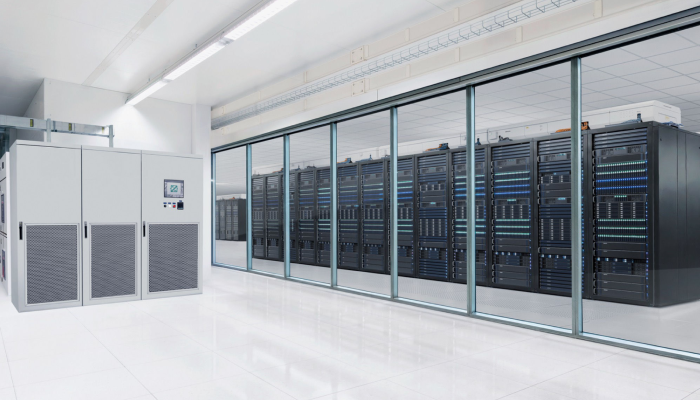
As artificial intelligence accelerates the demand for high-performance computing, power infrastructure is emerging as one of the biggest challenges facing data center operators. To address this, Infineon Technologies AG and Skeleton Technologies have signed a Memorandum of Understanding (MoU) to jointly develop advanced power solutions aimed at improving the efficiency, resilience, and performance of AI data centers.
The partnership will focus on next-generation technologies such as solid-state transformers (SSTs) and high-power sidecar systems, which are increasingly viewed as crucial components in the evolution of AI infrastructure. These technologies are designed to enable more efficient power conversion, optimized energy delivery, and improved system reliability across the entire power chain, from the electrical grid to computing workloads.
“AI is fundamentally transforming power infrastructure requirements, driving the need for more efficient, resilient and intelligent energy architectures.”
– Andreas Weisl, Executive Vice President & Chief Sales Officer, Industrial and Infrastructure, Infineon Technologies
By combining Infineon’s CoolSiC™ silicon carbide and CoolGaN™ gallium nitride power semiconductor technologies with Skeleton Technologies’ expertise in supercapacitor-based energy storage and power conversion systems, the companies aim to develop solutions that can support the growing power density requirements of modern GPU-intensive AI environments.
According to the companies, future AI data centers will require significantly more power within the same physical footprint, making energy efficiency and power density critical design priorities. The collaboration will also explore peak-shaving systems that help manage power fluctuations and enhance operational stability.
Beyond performance improvements, the initiative aims to reduce the total cost of ownership for data center operators while supporting sustainable AI infrastructure growth. The partnership highlights a broader industry shift toward advanced power architectures as organizations seek to scale AI workloads without compromising reliability, efficiency, or resilience.