




Trusted execution, sovereign GPU infrastructure, and multi‑cloud resilience emerge as top priorities as AI reshapes privacy and operational risk
As organisations prepare to mark Data Privacy Day on January 28, Leaseweb executives say 2026 will be the year when data privacy becomes a practical engineering discipline driven by AI adoption, sovereignty needs, and mounting concerns around hyperscale risk concentration.
Richard Copeland, CEO of Leaseweb USA, said the most significant shift is the mainstream viability of Trusted Execution Environments (TEEs), enabling sensitive workloads to be isolated at the hardware and memory level. “When you can lock down data at the hardware layer, you’re no longer tied to a single cloud provider for safety,” he said. “You gain the freedom to distribute high‑value workloads across clouds, edge locations and on‑prem environments without sacrificing confidentiality.”
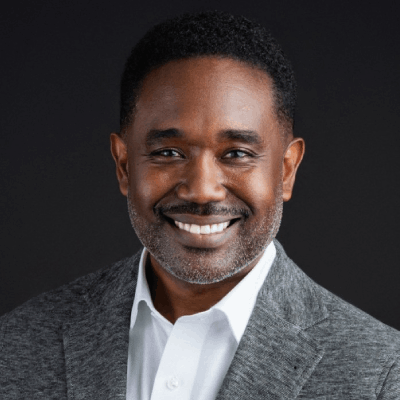
“In 2026, data privacy stops being a compliance task and becomes a direct function of architectural decisions. Infrastructure strategy is now inseparable from privacy strategy.”
— Richard Copeland, CEO, Leaseweb USA
Copeland warned that the rise of agentic AI workflows is exposing the fragility of large multi‑tenant cloud environments from noisy‑neighbour issues to opaque GPU allocation and cascading failures. As attackers increasingly use AI to probe those weak points, more enterprises are shifting toward regional, bare‑metal, and single‑tenant architectures where the “blast radius is smaller and performance is predictable.”
“Privacy and operational resilience have become the same conversation,” he added.
“Canadian businesses are realising that sovereignty, control, and continuity cannot be outsourced. Hybrid and sovereign GPU infrastructure are becoming essential to protecting sensitive AI workloads.”
— Roger Brulotte, CEO, Leaseweb Canada

Roger Brulotte, CEO of Leaseweb Canada, said a similar shift is underway in Canada as AI moves from experimentation to necessity. Organisations training models on sensitive data are discovering that on‑prem systems fall short while hyperscalers introduce jurisdictional and continuity risks. “That’s why we’re seeing strong momentum toward Canadian sovereign GPU infrastructure,” Brulotte said. “It keeps training data, model artefacts and IP under Canadian legal protection.”
He noted that hyperscalers were never designed to guarantee sovereignty or continuity for national data. “Relying on one global provider concentrates risk. Businesses now want predictable performance, clear jurisdiction and real human support not a ticketing portal.”
Both leaders predict that in 2026, the organisations that lead on data privacy will be those that deliberately diversify infrastructure, prioritise control over convenience, and build AI systems on verifiable, sovereign foundations.