




On National Startup Day, founders and operators reflect on a shift toward impact, trust, and resilient growth—across logistics, cybersecurity, fintech, AI infrastructure, manufacturing, consumer goods, and communication.
India has never lacked for ambition. Over the past decade, it has learned something far more difficult: how to turn ambition into durable, compounding impact. National Startup Day observed on January 16 arrives this year as more than a commemoration of entrepreneurial grit. It is a marker of maturity. From Tier‑I cities to fast-rising Tier‑II and Tier‑III hubs, the country’s entrepreneurial energy has moved beyond quick wins and blitzscaling to the patient work of building systems that last trusted digital rails, resilient supply chains, clean labels and transparent compliance, AI-ready infrastructure, and communication that reaches every consumer in every language.

“Intelligent matching reduces waste.”
— Dhruv Taneja, MatchLog
If the past phase was about proving that India could build at global velocity, this next chapter is about proving that it can build with global credibility. The voices shaping that evolution from logistics and payments to cybersecurity, GCCs, and food innovation—form a cohesive message: innovation now sits on foundations of trust, governance, localization, and long-term thinking.
The New Ambition: Systems that Scale, Sustain, and Serve
A decade ago, India’s startup story was told through the lens of brave disruption new entrants overturning legacy practices at speed. Today, the story reads differently. The founders who lead the next wave are not only solving problems; they’re stitching together coherent systems. They seek efficiency over spectacle, resilience over vanity metrics, and steady network effects over one-off growth hacks. And in doing so, they are reshaping the idea of progress itself: progress that includes MSMEs, builds rural connectivity, respects compliance, and achieves global standards without abandoning local realities. This is not the end of innovation; it’s innovation with deeper roots.
“Trust is the strongest differentiator.”
— Dr. Sanjay Katkar, Quick Heal/Seqrite
Logistics Learns to Think: Cutting Waste, Strengthening Trade
Global commerce is only as strong as its least efficient node. For decades, logistics in emerging markets wrestled with fragmented networks, underutilized capacity, and a lack of trusted, shared data. Now, platforms built in India are bringing order and intelligence to that chaos.
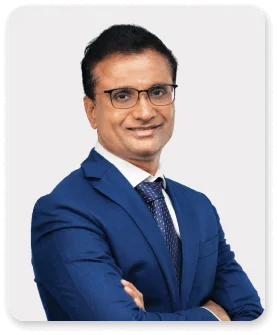
“India’s startup ecosystem now ranks among the world’s leading innovation hubs, with founders addressing complex global challenges across industries,” says Dhruv Taneja, Founder & Global CEO, MatchLog. “In logistics and trade, the focus is on building smarter and more sustainable systems. At MatchLog, we enable manufacturers and logistics partners to collaborate through intelligent matching that reduces waste and strengthens global commerce.”

“Build for impact, not just scale.”
— Prakash Ravindran, InstiFi
The idea is elegantly simple: match supply and demand in real time, minimize empty miles and idle assets, and let data do the heavy lifting. It’s this combination sustainability and systemic efficiency that signals how Indian founders are reframing value creation. “National Startup Day celebrates entrepreneurs who are translating India’s ingenuity into solutions that benefit businesses, communities, and the planet,” Taneja adds. In this view, the best logistics platforms are not merely marketplaces; they’re coordination engines turning operational waste into measurable gains.
Trust at Scale: Cybersecurity as the Bedrock of Growth
In a borderless digital economy, trust isn’t a soft value; it’s a hard moat. Startups operating in cloud-native environments, with distributed teams and global customers, must protect data, identities, and infrastructure with enterprise-grade discipline.
“Communication is the new competitive edge.”
— Harsha Solanki, Infobip

“Start-ups represent the courage and ambition of India’s innovators… Today, India’s startup ecosystem has crossed a remarkable milestone with more than 2 lakh DPIIT-recognised startups, collectively generating over 21 lakh jobs,” notes Dr. Sanjay Katkar, Joint Managing Director at Quick Heal Technologies. “As startups scale at speed, trust becomes their strongest differentiator. In a world where technology knows no borders, cybersecurity is no longer optional. It is fundamental to sustainable growth.”
Quick Heal’s enterprise arm, Seqrite, aims to simplify security for lean teams. “Founders should be able to focus on building products and markets, not worrying about cyber risk. Through Seqrite, we are simplifying enterprise grade security so it is easy to deploy, easy to manage, and effective even without large dedicated security teams,” says Dr. Katkar. He points to AI-driven capabilities such as GoDeep.AI, AntiFraud.AI, and the Seqrite Intelligent Assistant, fuelled by threat intelligence from Seqrite Labs, helping organisations predict, detect, and respond to attacks in real time. “On National Startup Day, we celebrate India’s entrepreneurs and the resilient digital foundation they are creating for the future.” The message is clear: velocity without verification is a liability. Security isn’t a bolt-on; it’s a builder’s advantage.

“GCCs turn ambition into capability.”
— Piyush Kedia, InCommon
Fintech Grows Up: Compliance, Credibility, and Clarity
India’s fintech revolution is maturing. The early rush of experimentation has yielded to a phase where regulatory discipline and customer trust sit alongside innovation and scale.
“India’s startup ecosystem is moving into a more mature phase. Long-term sustainability, regulatory discipline, and customer trust are becoming as important as innovation and scale,” says Prakash Ravindran, CEO & Director, InstiFi. For fintechs, he argues, the winners will be those who build secure infrastructure, embrace transparent processes, and run compliance-first operations from payments to lending, reconciliation to risk management. “As the ecosystem evolves, startups that focus on solving real business challenges while maintaining governance standards will be better positioned to grow responsibly.”
InstiFi’s mission is to enable reliable digital payments for businesses of all sizes, especially those that have historically lacked dependable rails. “The coming years will define how Indian startups build resilience, credibility, and lasting impact across the digital economy,” Ravindran adds. In other words, fintech scale is now measured not only by throughput but by the auditability of the rails themselves.
“The future belongs to those who control their compute.”
— Narendra Sen, RackBank & NeevCloud

Communication as Infrastructure: Reaching Bharat, at Scale and in Context
The next 500 million users do not live inside a monolith. They speak dozens of languages, operate in uneven connectivity, and expect seamless, secure interactions across channels. For these users, communication is not a marketing function; it is infrastructural.
“India’s startup ecosystem has become the third-largest hub globally, with over 6 lakh startups. Many of these are now emerging from tier 2 and tier 3 cities,” says Harsha Solanki, VP GM Asia, Infobip. Founders in deeptech, agritech, AI, and Bharat-first solutions face a reality where trust, connectivity, scalable communication, and language diversity determine growth velocity. Through CPaaS capabilities and the Infobip Startup Tribe, the company provides free communication credits, technical support, and access to global-grade infrastructure helping startups build localized, cost-effective, and reliable customer engagement.
“This National Startup Day, we celebrate India’s entrepreneurial spirit… At Infobip, we remain dedicated to supporting the startups at every step in their journey, further paving the way for sustained innovation and meaningful impact,” Solanki notes. As founders look beyond metros, multi-channel, multi-language communication becomes the delivery layer for growth—and a defining competitive edge.

“Transparency builds consumer confidence.”
— Dr. Rashida Vapiwala, LabelBlind
GCCs for Startups: Turning Global Ambition into Operating Muscle
Global Capability Centers were once the domain of multinational giants. Today, growth-stage startups and PE-backed companies are leveraging the GCC model to accelerate product cycles, consolidate capabilities, and scale globally without compromising on quality or cost.
“We believe startups are the heartbeat of innovation,” says Piyush Kedia, Co‑Founder & CEO, InCommon, a full-stack operator enabling growth-stage companies to build high-performing GCCs in India. “In the GCC, startups are emerging as key players… Yet, scaling in this dynamic ecosystem requires the right talent, operational support, and access to global networks.”
InCommon positions itself as a bridge: connecting founders to the people, technology, and insights needed to thrive. “When startups in the GCC are empowered, they do more than grow businesses—they create jobs, drive economic growth, and inspire a culture of entrepreneurship,” Kedia adds. The message is unmistakable: ambition scales faster when paired with institutional-grade operations.
“Healthy snacking is mainstream.”
— Deepak Agrawal, ProV

Compute Sovereignty: The Infrastructure Behind AI Ambition
The AI wave is as much about infrastructure as it is about algorithms. For startups, the cost, latency, and availability of GPU-rich compute can spell the difference between being an AI user and an AI leader.
“India’s startup ecosystem is pivoting from a phase of rapid experimentation to one of strategic scaling and sovereignty,” argues Narendra Sen, Founder & CEO, RackBank & NeevCloud. “As AI becomes the bedrock of innovation, mere access to the cloud is no longer enough startups need high-performance, AI-ready infrastructure that is both indigenous and affordable.”
Sen’s proposition is bold: decentralize AI power by building GPU-dense infrastructure in Tier‑II cities. “This isn’t just about cost efficiency; it’s about enabling founders to build, train, and deploy locally while competing globally. The next unicorn shouldn’t be limited by the cost of compute or data latency. The future belongs to those who control their compute.”

“Tech that strengthens MSME supply chains.”
— Kshitij Tiwari, ideazmeet
If the past era belonged to the app layer, the next may belong to those who own, orchestrate, or master access to compute, sustainably and at scale.
Transparent Labels, Trusted Supply Chains: How Foodtech Builds Confidence
Trust in the food we eat is rising to the top of consumer priorities. Clean labels, traceability, and regulatory clarity are no longer nice-to-haves; they are purchase drivers. That shift creates space for regulatory tech and labeling platforms to become growth catalysts.
“Startup India was launched on 16 January 2016 as a transformative national programme to nurture innovation, promote entrepreneurship and enable investment-driven growth,” says Dr. Rashida Vapiwala, Founder & CEO, LabelBlind. Since then, the ecosystem has evolved from early experimentation to real-world impact. “Data, automation, and AI are becoming integral to shoulder this growth… In sectors such as food, manufacturing, and consumer goods, startups are helping improve supply chains, strengthen global benchmarking, bring more consistency, and build global trust in Indian goods.”
She expects technology in food labelling and regulatory processes to “continue to improve transparency, strengthen consumer confidence, and support steady, long-term growth.” The takeaway: clarity is currency and labeling tech is minting it.
“Durability will define India’s next phase.”
— Amit Chand, BYT Capital

Healthy Is Here: F&B’s Clean-Label, Science-Led Rise
A parallel revolution is playing out on shelves and screens. Indian consumers, once driven primarily by taste and price, are now seeking health, function, and provenance and buying accordingly.
“The F\&B startup market is evolving with innovation in alternative proteins, functional nutrition, digitization, and e-commerce,” says Deepak Agrawal, Co‑founder & CBO, Proventus Agrocom Limited (ProV). “India is uniquely positioned to build not just for its own consumers, but for the global market.” With modern retail, e‑commerce, and quick commerce, young brands reach consumers faster and more transparently than ever.
“We see a considerable transition consumers are now making food choices based on health rather than just taste,” Agrawal notes. “With advancements in food science and supply chain tech, Indian startups are building scalable, clean‑label products that meet global standards while staying rooted in local preferences… The demand for healthy snacking is becoming mainstream.” For founders, science and storytelling are the twin levers of growth; for consumers, clean labels are both compass and contract.
Manufacturing’s Digital Backbone: MSMEs in the Global Arena
India’s manufacturing ambition anchored in Make in India, Atmanirbhar Bharat, and supply chain diversification—depends on whether MSMEs can plug into global value chains with confidence. That requires digital visibility, standardization, and trust.
“National Startup Day is a reminder that India’s startup ecosystem has entered a phase of maturity where impact matters as much as innovation,” says Kshitij Tiwari, Founder & CEO, ideazmeet. “The focus is shifting from rapid disruption to building platforms that address structural challenges fragmented supply chains, limited digital visibility, and trust deficits across the manufacturing value chain.”
Ideazmeet’s lens is pragmatic: strengthen the digital backbone so that MSMEs can access global markets through transparent, technology-led collaboration. “India’s manufacturers possess the capability and scale to support global demand, but unlocking this potential requires systems that improve discoverability, standardisation, and accountability,” Tiwari notes. Technology, thoughtfully applied, can improve sourcing efficiency, enhance compliance, and fortify supply chain resilience turning policy into measurable progress on factory floors.
The Long View: Durability, Inclusion, and a Viksit Bharat
At heart, the shift underway is philosophical. Founders are asking not just “Can we build it?” but “Will it endure?” They’re weighing trade-offs between scope and depth, speed and safety, novelty and necessity. That mindset matters because the next phase of India’s growth will be defined by institutions that outlast cycles, by ecosystems that broaden access, and by products that serve the widest swath of the population.
“As India’s startup ecosystem continues to mature, there is an increasing focus on addressing hard, fundamental problems through meaningful innovation,” says Amit Chand, Founder, BYT Capital. “Startups are increasingly being recognised not only as engines of growth, but also as contributors to responsible progress where considerations around sustainability and inclusion influence how solutions are designed, scaled, and made relevant to a wider population.”
He adds a decisive forecast: “Long-term thinking and durability will define India’s next phase of innovation, aligned with the vision of a Viksit Bharat.” That alignment economic progress with social purpose may be the hallmark of this era.
The Common Thread: Impact, Not Just Intention
Read across these perspectives and a coherent blueprint emerges:
- Build for trust. Security, compliance, and transparent processes are growth multipliers.
- Localize to scale. Language, channels, and context determine adoption outside metros.
- Strengthen the pipes. From AI-ready compute to CPaaS and digital supply chains, infrastructure is the new frontier.
- Back the backbone. Empower MSMEs and manufacturers with visibility, standards, and access.
- Make health habitual. Clean labels and functional nutrition are mainstream drivers, not niche indulgences.
- Marry policy and product. Operationalize national priorities Atmanirbhar Bharat, Make in India through usable platforms.
- Favor endurance over headlines. Durable systems win over viral spikes.
This is the architecture of a startup nation growing into an innovation power one that is comfortable building at the intersection of scale and stewardship.
National Startup Day, Reimagined
When Startup India was launched on January 16, 2016, it asked a bold question: could India become a nation of job creators rather than job seekers? A decade on, the answer arrives not as rhetoric but as operating reality—millions of jobs created, sectors transformed, global-grade companies born in India and built for the world.
But the more interesting answer is qualitative. India is not only building faster; it is building better smarter logistics, trusted fintech rails, safer digital environments, communication that bridges distances, AI infrastructure that reduces barriers, manufacturing networks that include the smallest suppliers, and food systems that favor clarity and health.
That evolution is not accidental. It is the daily work of founders, operators, policy shapers, and ecosystem partners who have moved past the dopamine of disruption to the discipline of design designing for longevity, for trust, and for impact.
The Road Ahead: Build What Only India Can
Every ecosystem has its comparative advantage. India’s is becoming clearer: the ability to build for extreme diversity at national scale and then generalize those solutions globally. Logistics platforms that tame fragmentation. Security stacks that protect high-velocity growth. Payments rails that are inclusive by default. AI infrastructure that is sovereign, sustainable, and spread across the country. GCCs that turn entrepreneurial vision into repeatable operational excellence. Food systems that respect both science and cultural taste.
“National Startup Day celebrates entrepreneurs who are translating India’s ingenuity into solutions that benefit businesses, communities, and the planet,” as Dhruv Taneja puts it. That translation is the work of a generation and it is well underway.
So, celebrate the unicorns if you must. But on this National Startup Day, it’s just as fitting to celebrate something quieter, sturdier, and ultimately more consequential: the foundations. The rails, standards, labels, protocols, platforms, and compute that make the magic repeatable.
Because that is how a startup nation becomes an innovation nation. Not merely by moving fast, but by moving wisely and by ensuring that what we build today still stands, still serves, and still inspires tomorrow.