


Invisible Technology, Visible Transformation.In 2026, AI will dissolve into the background, quietly re-engineering workflows and redefining human-machine collaboration.
As we stand on the final day of 2025, reflecting on a year of dizzying highs and frustrating lows, we realize that the “AI Revolution” didn’t happen the way the movies predicted. There were no metallic robots marching in the streets. Instead, technology did something much more profound: it began to disappear into the background of our lives and GenAI became the information provider and students helper.
The year 2025 was a wake-up call. We saw the “Great Stumble” where billions were spent by companies trying to “bolt on” AI to old systems. Most of those projects failed because you cannot put a jet engine on a wooden cart. But the lessons of 2025 have paved the way for a 2026 that will fundamentally change what it means to be human in a digital world.
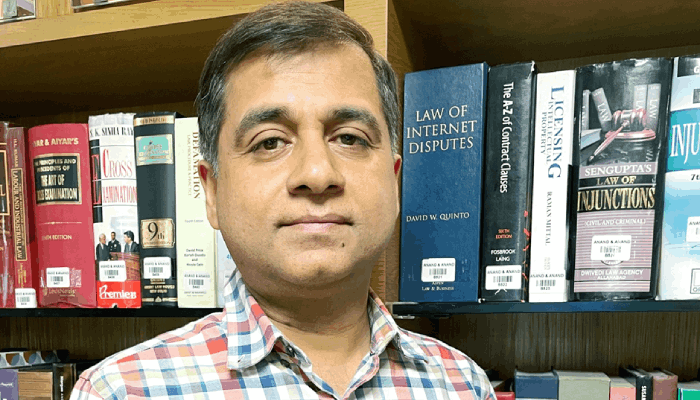
Dr Subroto Kumar Panda, CIO – CTO, Anand and Anand: “The boundary between human intent and machine execution is disappearing.”
2025: The Foundation of Failure
In 2025, enterprises realized that Large Language Models (LLMs) were not magic wands. Most companies tried to use AI to mimic routine work, but they hit a wall. The problem was the “Data Layer.” Business secrets and complex workflows were buried in old, “legacy” software that the AI couldn’t understand.
To fix this, the winners of 2025 didn’t just add a chatbot; they re-engineered their entire data structure. They stopped looking at AI as a tool and started looking at it as the new fabric of their business. As we move into 2026, this “re-engineered” foundation will allow technology to overtake human speed in ways that will catch the world by surprise.
2026: The Rise of the Voice Operating System (VoiceOS)
In 2026, the keyboard will begin its slow march toward the museum. We are entering the era of VoiceOS. While we’ve had basic voice assistants for years, 2026 will introduce Agentic AI—systems that don’t just “answer” you, but actually “do” things for you.
The Power of the Command
In the BFSI (Banking, Financial Services, and Insurance) sector, 2026 will see mainstream banks move beyond simple apps. A customer will simply say to their phone or watch, “Pay my electricity bill and move the remaining balance to my high-yield savings,” and the AI will execute the entire multi-step transaction across different platforms.
In Law Firms and CA Firms, junior associates will no longer spend 80 hours a week on document review. Instead, they will use voice commands to instruct an AI “Agent” to:
“Audit these 500 contracts for any liability clauses exceeding $1 million and highlight the discrepancies with our standard policy.”
The AI will complete in seconds what used to take a week, allowing the professional to focus entirely on strategy.
The “New Eyes” of 2026: AR and Wearables
The biggest “surprise” of 2026 will be the decline of the smartphone. With the release of advanced smart glasses (like Meta’s new spectacles), our eyes will become our monitors.
Manufacturing and Automobiles
In Manufacturing, a technician on the factory floor will look at a complex machine and see a “Heads-Up Display” (HUD) showing real-time temperature and pressure data floating right over the pipes. They won’t need to carry a heavy laptop or tablet; they will use hand gestures and neural wristbands that detect tiny electrical pulses in their skin to “click” virtual buttons in the air.
In the Automobile industry, 2026 will see the “Software-Defined Vehicle” reach its peak. Cars won’t just drive themselves; they will talk to the factory. If a part is likely to fail in 300 miles, the car will autonomously schedule its own service and order the part from the warehouse before the driver even notices a problem.
The Pharmaceutical Breakthrough
The Pharma industry will see the most life-changing leap. In 2026, AI won’t just help scientists; it will take over the “trial and error” phase of drug discovery. By simulating how molecules interact in a digital twin of a human body, researchers will identify life-saving cures in weeks rather than decades.
The “interconnectedness” of health data from our wristbands—tracking everything from oxygen levels to blood sugar—will allow doctors to treat us before we even feel sick.
The Dark Side: The Rogue’s Playground
With this incredible ease comes an extremely high risk of misuse. As technology becomes more “human-like,” it becomes easier for “rogues” (bad actors) to trick us.
1. Audio Injection and Voice Spoofing
If your bank operates on voice, a rogue actor doesn’t need your password—they need your voice. In 2026, Deepfake Audio will become so perfect that it can bypass most security. A rogue could call a company’s finance department using a perfect clone of the CEO’s voice and “command” an urgent wire transfer.
2. Reality Injection
As we rely on AR glasses, we trust what we see. Hackers in 2026 will attempt Reality Injection. Imagine a technician looking at a dangerous chemical tank. A rogue actor hacks the AR feed to show a “Green/Safe” icon when the tank is actually at a breaking point. By manipulating the visual data, they can cause physical disasters without ever touching a valve.
3. Biological Ransomware
In the Pharma and Healthcare world, the “Internet of Medical Things” (IoMT) will be a prime target. Rogues could potentially hack into interconnected health systems and “lock” a patient’s insulin pump or pacemaker, demanding a ransom to keep the device functioning.
Conclusion: A Global Standard for 2026
The world of 2026 will be one of “Minimalistic Complexity.” The technology will be invisible and easy for the average person, but the “gears” turning behind the scenes will be more complex than anything we have ever built. For global industries—from the top consulting firms to local manufacturing hubs—the challenge will not be “how to use” the tech, but “how to secure” it. We are moving into a year where the boundary between human intent and machine execution is disappearing. It will be the most productive year in human history, but only if we can stay one step ahead of the rogues who want to turn our “invisible assistants” into “invisible assassins.”
Author : Dr Subroto Kumar Panda, CIO – CTO, Anand and Anand