

How capex, cloud, chips, and skilling are being stitched into an AI‑ready national strategy
The Sunday that split India’s story in two
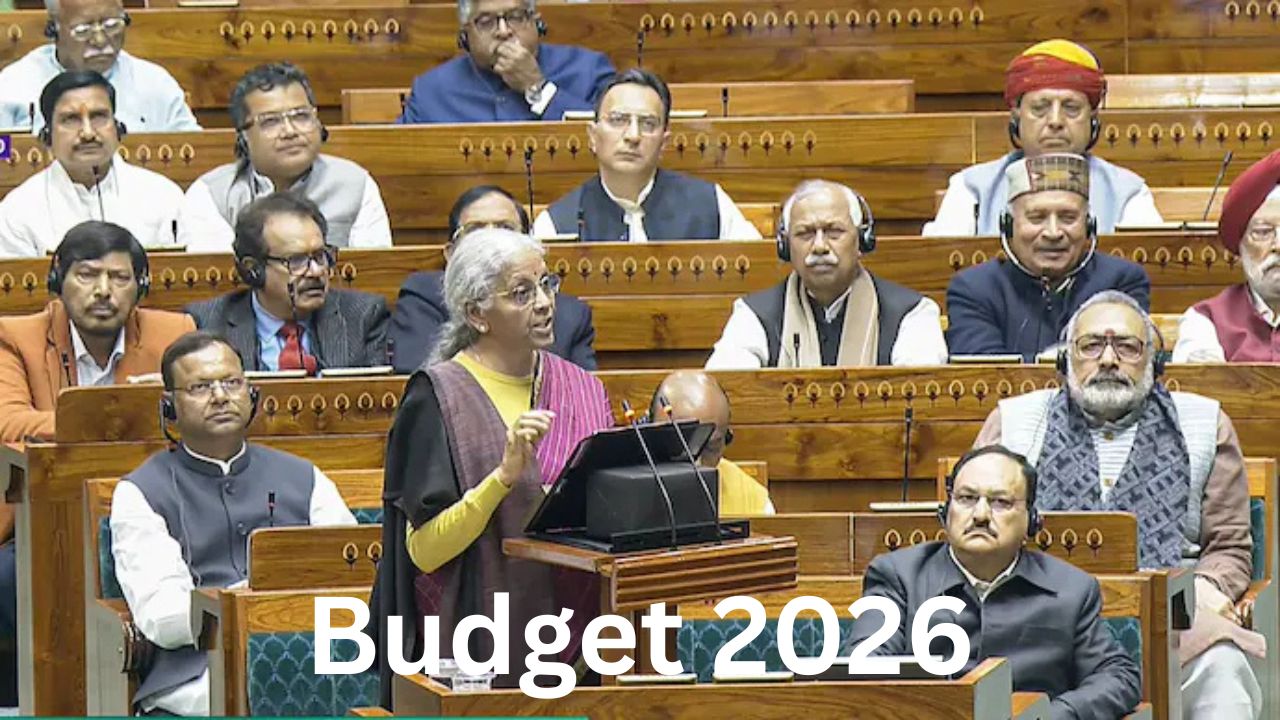
February 1, 2026 was not a normal Budget day. It was a Sunday, the markets were open, and India watched policy meet price discovery in real time. As Finance Minister Nirmala Sitharaman presented the Union Budget 2026–27, the market narrative turned sharply negative: the Sensex closed down 1,546.84 points and the Nifty ended lower by 495.20 points, reflecting a swift repricing of risk sentiment.
But day‑one market moves rarely tell the decade story. Under the surface of Budget-day volatility, Budget 2026 reads like a systems blueprint one that attempts to connect physical infrastructure (capex and mobility corridors) with digital infrastructure (cloud, data centres, IT services certainty), and then anchor both to deep-tech manufacturing (semiconductors, electronics components, rare earth corridors) and human capital (skilling, education‑to‑employment alignment). In that sense, this is not merely a Budget; it’s a bet about India’s competitive identity in the AI era: build the rails and build the data rails together.
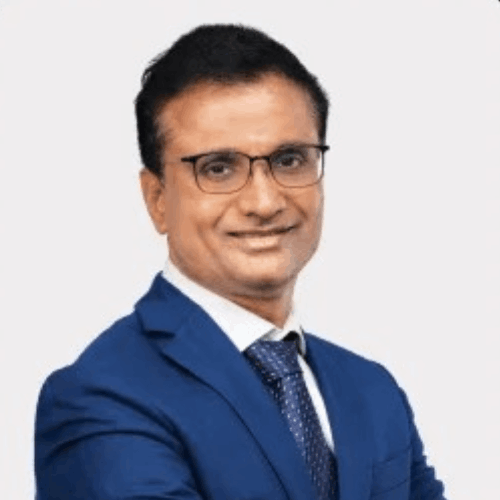
“As India expands AI and cloud adoption across sectors, cyber resilience becomes foundational—not optional.”
Dr. Sanjay Katkar, Quick Heal Technologies (Seqrite)
The macro contract: growth momentum with fiscal credibility
If the Budget has a foundational promise, it is this: keep building productive assets while maintaining a credible fiscal glide path. Two numbers define that posture. First, the government raised public capital expenditure (capex) to ₹12.2 lakh crore for FY27, up from ₹11.2 lakh crore. Second, it set the FY27 fiscal deficit target at ~4.3% of GDP, continuing the consolidation trajectory.
This pairing matters because capex is the state’s most direct lever for demand creation and asset formation, while deficit discipline shapes investor confidence, borrowing costs, and macro stability. Budget 2026 signals that India intends to keep infrastructure-led growth central even as it tightens fiscal parameters—an approach that, in theory, crowds in private investment by improving confidence and the investment climate.
“Structural clarity… reduces friction and compliance overheads… enables enterprises to move from pilots to large-scale AI deployment.”
Sharad Sanghi, Neysa
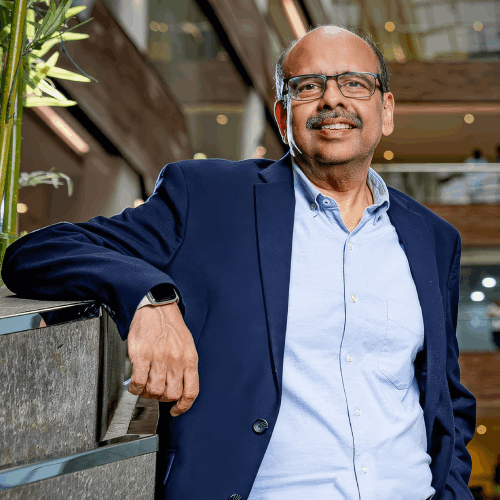
Sunil Mathur, MD and CEO, Siemens Limited, captures the spirit of this balance: record capex, sustained infrastructure focus, and a deficit target around 4.3% reflect a “continued and disciplined approach” to strengthening India’s growth foundations. Meanwhile, Aparna Iyer, CFO, Wipro Limited, applauds the government’s fiscal target discipline amid volatility and links it to improved predictability and ease of doing business critical for investment decisions in large-scale services and technology ecosystems.
Concrete moves first: mobility and corridors as growth connectors
Public capex isn’t only about “more spend” it’s about how the economy moves. Budget 2026 proposed seven high‑speed rail corridors designed to function as growth connectors across India’s most productive clusters: Mumbai–Pune, Pune–Hyderabad, Hyderabad–Bengaluru, Hyderabad–Chennai, Chennai–Bengaluru, Delhi–Varanasi, and Varanasi–Siliguri.
The economic logic is straightforward: faster inter‑city travel changes labour mobility, business logistics, and corridor economics. Over long horizons, these links can help build “multi‑city markets” where industry, services, and talent are distributed across connected urban regions. Budget documents and coverage also stress the government’s continuing focus on building infrastructure in Tier‑2 and Tier‑3 cities, which are increasingly positioned as growth centres.

“Combining IT services and R&D services into a single bucket… raising safe-harbour thresholds… will provide tax certainty and reduce cost of compliance.”
Aparna Iyer, Wipro
For industrial technology companies, this matters as much as tax rates do. Connectivity infrastructure becomes the scaffolding for supply chain efficiency, distributed operations, and regional talent availability. It is also the kind of “real economy” foundation that digital infrastructure ultimately needs: data centres, cloud regions, and network backbones tend to follow stable corridors of demand, power availability, and connectivity.
Compute becomes “core infrastructure”: the 2047 cloud and data-centre runway
If high‑speed rail was the big physical connector story, Budget 2026’s boldest digital connector is the long‑horizon cloud/data centre regime. The Budget proposed a tax holiday until 2047 for foreign companies providing cloud services to global customers using data centre services based in India, with a key condition: services to Indian customers must be routed through an Indian reseller entity.
Alongside this is the second pillar of predictability: a 15% safe harbour on cost when a related Indian entity provides data centre services aimed at easing transfer pricing friction and making large-scale capacity planning easier for global players.
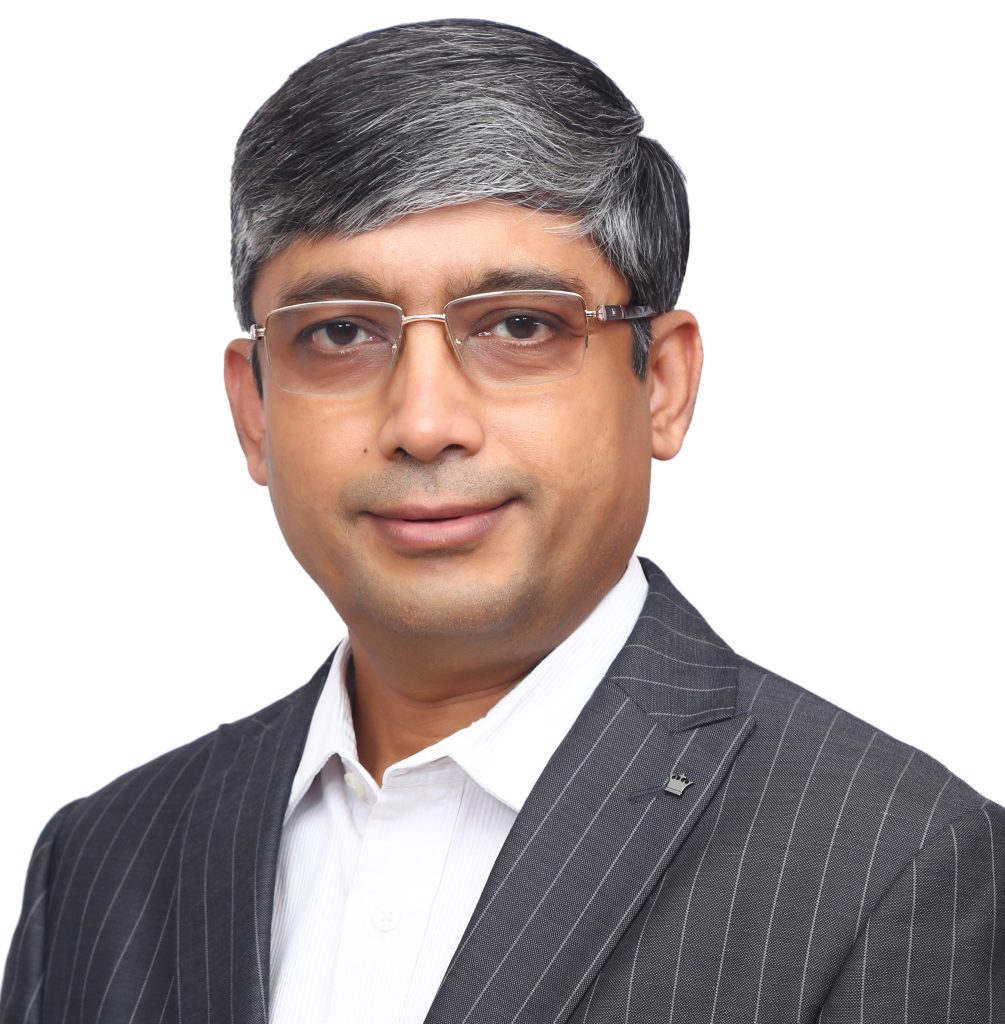
“Tax certainty… enhances predictability for capital-intensive digital infrastructure… but affordable power, faster fibre, and sustainability alignment are essential.”
Manoj Paul, Equinix India
These measures do something subtle but profound: they elevate data centres from “IT real estate” to strategic national infrastructure the platform on which AI workloads, sovereign compute, global cloud exports, and digital public services can scale. This long-horizon approach also reflects a view that compute capacity is now comparable to power and transport: nations that host it gain investment, talent, ecosystem spillovers and strategic leverage.
Why a 2047 horizon changes investment behaviour
Data centres are capital-intensive and multi-decade. The policy value here is not merely the rate; it is the time horizon. Investment decisions in hyperscale campuses are influenced by power provisioning, network contracts, land and zoning, cooling, sustainability requirements, and multi-phase expansion planning. A long-lived policy regime reduces “policy risk premium,” which can unlock quicker commitments and larger pipeline planning.
This is also why the Budget’s safe harbour structure matters as much as the holiday: global providers often operate through complex related‑party structures, and predictable margins reduce friction costs that otherwise delay capital deployment.

“A bold, investor-attractive policy… long-term horizon… supports AI-ready hyperscale expansion.”
Pratap Mane, Colt DCS
Operators speak: what the cloud/data-centre regime unlocks
Colt DCS: hyperscale certainty for AI‑ready builds
Pratap Mane, President & Country Head – India, Colt DCS, calls the 2047 tax holiday “globally standout” in its long horizon and investor attractiveness. He links the policy directly to capex-heavy hyperscale programmes and says it supports Colt DCS’s expansion plans, including delivering 250+ MW of AI‑ready data centre capacity for hyperscale clients. While company-specific capacity plans sit outside Budget documents, the policy levers he cites tax holiday to 2047 and 15% safe harbour are the regime’s core enablers.
CapitaLand Investment: sustainable, high-density infrastructure across key metros
Surajit Chatterjee, Managing Director & Head – Data Centre, India, CapitaLand Investment, describes the tax holiday + safe harbour combination as “timely and forward-looking,” arguing it improves India’s appeal via long-term certainty and operational predictability. He ties it to CapitaLand’s expansion ambitions across major markets like Mumbai, Chennai, Bengaluru and Hyderabad, and expects the incentive to accelerate sustainable, high-density data centre infrastructure and high-quality employment. The enabling fiscal architecture here is clearly the 2047 holiday and safe harbour regime.
“Timely, forward-looking… long-term tax certainty… supports expansion across Mumbai, Chennai, Bengaluru, Hyderabad… sustainable high-density infrastructure.”
Surajit Chatterjee, CapitaLand Investment

Equinix India: policy certainty is hugebut power and fibre decide scale
Manoj Paul, Managing Director, Equinix India, frames Budget 2026 within a global contest for digital and AI investments, arguing that the 2047 horizon and safe harbour certainty improve predictability for capital-intensive infrastructure. He also highlights the local reseller condition as a mechanism for domestic value creation. Importantly, he adds an execution reality: AI-ready scale will still hinge on affordable, dependable power, faster fibre deployment, and sustainability alignment without which policy certainty alone cannot deliver capacity fast enough.
Hitachi Vantara: data centres as the operating system for AI adoption
Hemant Tiwari, Managing Director & Vice President, India & SAARC, Hitachi Vantara, interprets the cloud/data centre regime as ecosystem-building: incentives and safe harbour clarity attract global investment, accelerate data centre growth, enable secure cloud operations, and support emerging tech adoption like AI. He also ties this to expansion across Tier‑2 and Tier‑3 markets—where infrastructure can unlock new talent pools and distributed growth. The data layer: why storage, resilience, and protection become mission-critical
The cloud/data-centre regime focuses on capacity creation, but AI-ready economies depend on more than megawatts and racks. They depend on how data is managed, protected, scaled, and governed across enterprises and public institutions. As AI workloads move from experimentation to regulated and business-critical deployment, resilience becomes a competitive requirement especially across sectors like BFSI, healthcare, telecom, and digital public infrastructure.

“AI-led growth isn’t possible without deep, resilient data infrastructure… tax holiday to 2047 unlocks sustained investment in high-performance, energy-efficient data centres.”
Ramanujam Komanduri, Pure Storage
Ramanujam Komanduri, Country Manager, Pure Storage India, articulates this plainly: AI-led growth isn’t possible without deep, resilient data infrastructure. He highlights the capex push and the 2047 data centre incentives as a foundation for high-performance, energy-efficient, resilient facilities while noting that data management and secure scaling will become mission-critical as adoption accelerates. The policy pieces he refers to (capex rise, tax holiday to 2047) are core Budget facts.
In practice, the implication is that India’s data centre boom will increasingly be judged not only by how quickly capacity is built, but by how safely and efficiently data and AI workloads can be run—especially under sovereignty, compliance, and security constraints.
IT services: the “quiet reform” that reduces friction at scale
While data centres are the physical foundation, India’s IT services sector is still the operating engine that exports capability and modernizes enterprises. Budget 2026 proposes to club software development, ITES, KPO, and contract R\&D relating to software development under a single “information technology services” category, apply a uniform 15.5% safe harbour margin, expand the safe-harbour threshold up to ₹2,000 crore, and move to a more automated, rule-driven model.
This matters for a simple reason: scale creates complexity. Large IT services firms and GCCs operate hybrid models that blend engineering, operations, analytics, and R\&D. Ambiguity in categorization and transfer pricing can become a material friction cost. A unified category and rule-driven safe harbour reduces uncertainty and compliance overhead—making India a more predictable base for global delivery and innovation.
“Capex ₹12.2 lakh crore + ISM 2.0… ₹40,000 crore components… rare earth corridors… skilling… accelerate innovation and competitiveness.”
Meenu Singhal, Socomec

Sharad Sanghi, Co-founder & CEO, Neysa, frames the reform as structural clarity for AI and cloud infrastructure ecosystems reducing compliance overheads and enabling enterprises to move from pilots to scaled AI deployments. He also highlights the 2047 cloud/data centre incentives as strengthening India’s attractiveness as a cloud and AI hub. Budget reports and coverage align with this view: the safe harbour + data centre incentive package is explicitly designed to reduce friction and increase certainty.
Aparna Iyer, CFO, Wipro, similarly emphasizes that combining IT services and R\&D services into one bucket, raising safe-harbour thresholds, and speeding closure of unilateral APAs (as announced) improves tax certainty and reduces compliance costs—strengthening the operating environment for the sector. The Budget’s safe harbour reform is reported consistently across multiple coverage sources.
Dr. Sanjay Katkar (Joint MD): Security becomes foundational to digital acceleration
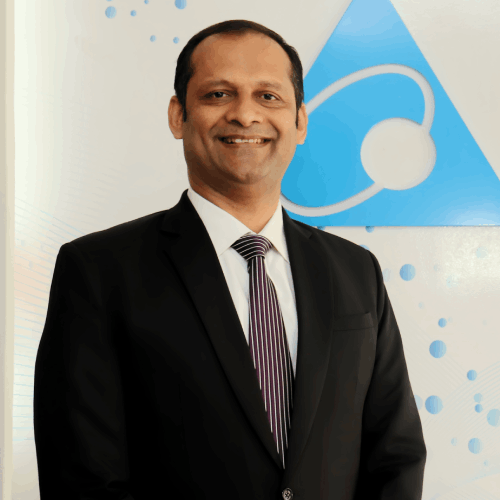
“The Government’s strong thrust on digital acceleration across services, cloud infrastructure and data centre ecosystems… will lead to deeper adoption of AI-driven and data-led platforms. With initiatives such as AgriStack integration with AI, digital education ecosystems, medical value tourism hubs and large-scale skilling programmes, cyber resilience becomes foundational to this growth… Quick Heal and Seqrite remain committed to protecting the country’s digital frontiers.”
“Scale, consistency, seriousness… focus beyond capacity to full-stack design, Indian IP, skills, and supply-chain resilience.”
Niranjan Nayak, Delta Electronics
Dr. Kailash Katkar (CMD): Citizen footprint expandsdata protection becomes critical
“The focus on AI-driven systems in healthcare, agriculture (AgriStack) and education ecosystems significantly expands the digital footprint of citizens, making data protection and consumer cyber resilience increasingly critical… initiatives such as AVGC labs, National Digital Knowledge Grid for tourism, Medical Value Tourism hubs and large-scale skilling programmes underline the importance of safeguarding personal data and digital identities, and the need for self-reliant indigenous cyber resilience.”
Deep-tech manufacturing: semiconductors and components move from aspiration to structure
AI and cloud ambition ultimately bottleneck on hardware. Budget 2026 makes that explicit via two headline moves:
- India Semiconductor Mission (ISM) 2.0: launched to expand semiconductor capability by producing equipment and materials, developing full-stack Indian IP, strengthening supply chains, and focusing on industry-led research and training centres.
- Electronics Components Manufacturing Scheme (ECMS): outlay increased to ₹40,000 crore, reflecting intent to deepen domestic component manufacturing and value addition beyond assembly.
“Growth with inclusion… skilling + science, innovation and research… energy-efficient logistics + data centres reinforce confidence in the digital economy.”
Sunil Bharti Mittal, Bharti Enterprises

This pairing is crucial. Semiconductors are not just about fabs; they are about an ecosystem materials, tools, packaging, testing, design IP, and a skilled workforce. Budget coverage stresses ISM 2.0’s shift toward equipment, materials, and IP, while ECMS focuses on broad component ecosystems across multiple states and product categories.
Budget documents and summaries also highlight rare earth corridors as a strategic move to strengthen critical mineral supply chains for electronics and advanced manufacturing. Together, ISM 2.0, ECMS, and rare earth corridors represent an attempt to secure upstream dependencies especially in a world where supply chains are increasingly politicized and technology ecosystems are being “re-shored” or “friend-shored.”
Industrial leadership reacts: “scale, consistency, seriousness”
Socomec: deep-tech indigenization, rare earths, and skilling
Meenu Singhal, Regional Managing Director, Socomec Innovative Power Solutions, calls Budget 2026–27 a decisive course toward global technology leadership. She points to capex at ₹12.2 lakh crore, ISM 2.0, ₹40,000 crore for electronics components, and rare earth corridors as proof of deep-tech indigenization and supply chain security focus exactly the pillars reported in Budget coverage.
Singhal also emphasizes the role of skilling in creating quality employment aligned with Budget’s skilling thrust and enhanced allocations. She welcomes the ₹10,000 crore SME Growth Fund as a boost to innovation and competitiveness across sectors like electrical manufacturing consistent with Budget announcements on SME support.
Delta Electronics: policy that goes beyond capacity to IP and resilience
Niranjan Nayak, MD, Delta Electronics India, says what stands out is the “scale, consistency, and seriousness” of the electronics and advanced manufacturing approach. He underscores that the focus goes beyond capacity to include full-stack design, Indian IP, skill creation, and supply chain resilience matching Budget messaging around ISM 2.0’s scope and the broader push to deepen value addition via ECMS.
Nayak’s bottom line is the most important metric for long-cycle investment decisions: clarity and continuity enable long-term capital planning and steady movement up the electronics value chain. The Budget’s multi-year, ecosystem-oriented language supports that narrative.
MSMEs: the missing middle gets a larger lever
Big industrial strategies fail if the “middle of the pyramid” can’t scale. Budget 2026 introduces a ₹10,000 crore SME Growth Fund aimed at supporting high-potential enterprises and reviving legacy clusters.
It also strengthens working capital rails via TReDS reforms, including moves to make TReDS a central transaction platform for purchases from MSMEs by CPSEs an effort to improve payment discipline and reduce working capital stress.
This matters especially for electronics and component ecosystems. Value addition doesn’t deepen through large players alone; it deepens through tooling firms, component suppliers, testing labs, and specialized MSMEs that can invest in quality, automation, and compliance. A Growth Fund and faster liquidity rails can determine whether MSMEs graduate into global suppliers or remain trapped in low-margin vendor roles.
Skilling: human infrastructure as national infrastructure
Budget 2026 is explicit about “Yuva Shakti” and the education-to-employment pipeline. One of the most striking numbers is the sharp boost to the Ministry of Skill Development and Entrepreneurship: an allocation reported at ₹9,885.80 crore for FY27, with emphasis on modernising ITIs and improving employability transformation.
The Budget also proposes a high-powered Education to Employment and Enterprise standing committee focused on services-led growth, employment, exports, and the impact of emerging technologies (including AI) on skills and jobs.
This human-capital agenda is not separate from the digital infrastructure agenda it is a prerequisite. Data centres need technicians and operations talent. Semiconductors need engineers, materials specialists, and quality professionals. Cloud and AI deployments need cybersecurity and governance capacity. If India wants to become an AI infrastructure hub, skilling must scale at a speed comparable to megawatt deployment.
The Tier‑2/Tier‑3 expansion thesis: where the next decade’s jobs could emerge
A recurring theme across Budget measures is geographic broadening. Capex and rail corridors target growth connectors. City infrastructure focus extends beyond metros. Digital infrastructure incentives aim to pull global investment that could spread campuses, connectivity and service jobs across multiple regions.
This is where cluster and ecosystem approaches become critical. Emerging tech clusters can combine local talent, university linkages, MSME suppliers, and anchor clients creating high-skill jobs outside traditional hubs. Budget’s MSME fund and skilling programs reinforce this potential by easing growth capital and workforce readiness.
Execution reality: the hard constraints that decide outcomes
Budget 2026 places long-horizon bets. But building an AI-ready digital economy has non-negotiable constraints. Industry commentary emphasizes that scale will require progress on three enablers:
- Power: Data centres are energy-intensive; AI workloads amplify power and cooling needs. Reliable, affordable power and renewable integration are critical to sustainable scale.
- Fibre and interconnect: Cloud exports and latency-sensitive workloads require fast fibre deployment and robust interconnect ecosystems.
- Policy consistency and compliance capacity: A 2047 horizon only works if rules remain predictable across cycles; the safe-harbour and automated regimes must reduce friction in practice, not just on paper.
The Budget’s genius is that it recognizes the need for predictability tax certainty, safe harbour, long validity. The risk is that execution lags behind ambition if power, permitting, and network build-out don’t keep pace.
Key Takeaways (Editor’s Box)
What Budget 2026 is really doing, in one page:
- Macro stability with investment intent: capex raised to ₹12.2 lakh crore with FY27 deficit at ~4.3%.
- Mobility as an economic connector: seven high-speed rail corridors to integrate major growth clusters.
- Digital infrastructure treated as strategic infrastructure: tax holiday until 2047 for foreign cloud providers using Indian data centres + 15% safe harbour for related-party services.
- IT services friction reduction: unified “information technology services” category + 15.5% safe harbour and higher threshold (₹2,000 crore).
- Deep-tech manufacturing depth: ISM 2.0 for equipment/materials/IP/supply chain + ECMS outlay to ₹40,000 crore, plus rare earth corridor push.
- MSME scaling: ₹10,000 crore SME Growth Fund + TReDS reforms to improve liquidity/payment discipline.
- Skilling as the workforce engine: skilling allocation boost (₹9,885.80 crore reported) + education-to-employment committee to align skills with AI-era jobs.
Conclusion:
Budget 2026 is best understood as a national systems strategy: build physical infrastructure to compress distance, build digital infrastructure to host global workloads, and deepen electronics manufacturing to secure the compute supply chain while scaling skills so the entire machine can run at national scale.
The market may remember the Sunday sell-off. But industry will measure something else: whether the 2047 cloud runway, safe harbour clarity, ISM 2.0 + ECMS, MSME scaling, and skilling push translate into an ecosystem that can compete globally across AI infrastructure, electronics value capture, and services-led exports.
If power, fibre, and sustainability constraints improve fast enough, India’s most ambitious claim in this Budget may become real: that the next decade is not about being the world’s fastest-growing digital market it’s about becoming one of the world’s most important places to build and run the digital economy itself.