


How CIOs, CDOs, Technology Leaders and Policymakers Can Shape the Region’s Next Decade of Growth Through Artificial Intelligence, Data, and Digital Transformation
A Gathering of Visionaries
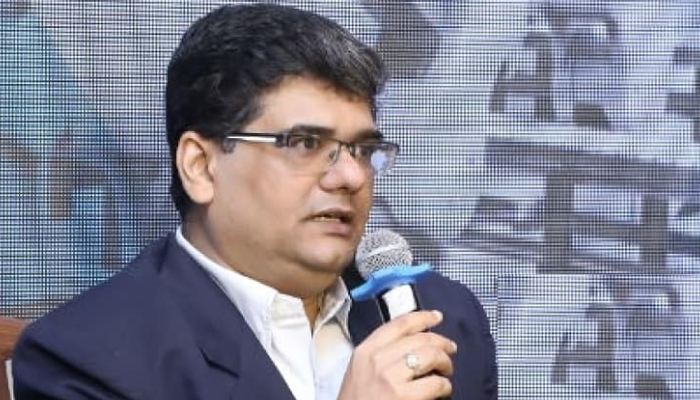
On 7 August 2026, at the prestigious CIO500 Awards & IT Convention held at Hotel Novotel, Kolkata, I had the privilege of serving as Chairperson and delivering the keynote address on a subject that will define the future economic trajectory of our region: “Eastern India 2030: Building an AI-First Economy Through Digital Leadership.”
As I stood before an audience comprising some of the region’s most accomplished technology leaders, security experts, data strategists, policymakers, academicians, and business executives, one realization became immediately evident. We were not assembled merely to discuss emerging technologies or exchange industry insights. We were gathered to explore how Eastern India could position itself at the forefront of the next wave of economic growth powered by Artificial Intelligence.
The transition to an AI-first economy is neither a technology initiative nor a government program. It is an ecosystem movement. It demands contributions from OEMs, system integrators, academic institutions, policymakers, startups, investors, and enterprise leaders. Yet among all stakeholders, one community occupies a uniquely influential position: the technology leadership fraternity.
The CIO, CTO, CISO, and CDO are no longer custodians of infrastructure alone. They have become architects of business transformation, responsible for translating vision into execution, strategy into innovation, and data into competitive advantage.
Measuring the Collective Strength in the Room
The gathering at Novotel represented a concentration of leadership rarely seen in one venue.
More than 110 CIOs, CISOs, CTOs, CDOs, and IT leaders came together alongside approximately 40 industry experts, business leaders, OEM representatives, system integrators, academicians, and public-sector decision makers.
The numbers behind that gathering were remarkable.
Collectively, those present represented over 100 organizations across manufacturing, healthcare, financial services, retail, logistics, media, public services, and infrastructure. Based on conservative estimates, these enterprises collectively manage technology budgets approaching ₹2,250 crore annually and influence business operations worth more than $35 billion.
Equally impressive was the intellectual capital assembled under one roof. Most attendees brought with them two to three decades of professional experience. Combined, the room represented nearly 4,000 years of cumulative leadership, innovation, operational knowledge, and business wisdom.
This was not an audience of technology enthusiasts. It was the economic and digital leadership engine of Eastern India.
If transformative change is to occur by 2030, it will be driven by leaders like these who have both the authority and the responsibility to shape organizational agendas.
“The organizations that will lead the next decade are not necessarily those with the largest technology budgets, but those that can convert data into decisions faster than their competition. AI is no longer an innovation initiative; it is becoming a business imperative. The real challenge lies in creating a culture where data, governance, and intelligence work together to drive measurable business outcomes.”
– Sourav Das, CDO, Rupa & Co. Ltd.
The New Mandate of the Modern CIO
Historically, CIOs were evaluated on infrastructure stability, service levels, uptime, and operational efficiency. Success was measured by how effectively technology supported the business.
Today, that definition has fundamentally changed. In an AI-driven era, digital leaders are expected not merely to support business strategy but to help create it. Technology is no longer sitting behind the business; it is increasingly becoming the business itself.
At the center of this transformation lies a leadership framework that I often refer to as the 4 Cs of the Modern CIO.
Creativity
AI does not reward conventional thinking.
Organizations that simply use AI to automate existing processes may achieve incremental improvements, but transformative value comes from reimagining products, services, customer experiences, and operating models.
Creative leaders challenge existing assumptions and explore opportunities beyond routine process automation. They ask not how technology can improve the current business but how technology can redefine the future business.
Courage
Digital transformation always involves uncertainty.
Investments in generative AI, machine learning, predictive analytics, autonomous workflows, and intelligent automation often require experimentation in areas where proven outcomes may not yet exist.
Leaders must possess the courage to take calculated risks, advocate for innovation, and remain accountable for strategic technology decisions.
Without courage, organizations remain trapped in incrementalism.
Caring
Technology adoption is ultimately a human challenge.
Artificial Intelligence frequently creates anxiety among employees who fear job displacement or role disruption. Effective leaders understand that successful transformation depends on empathy, communication, and inclusion.
Organizations that position AI as a tool for augmentation rather than replacement are far more likely to achieve widespread acceptance and sustainable success.
Collaboration
No AI initiative can flourish within the boundaries of an IT department. AI requires business context, operational expertise, financial validation, legal oversight, human resources involvement, and executive sponsorship.
The most successful organizations are those where technology leaders collaborate across functions and create a culture where innovation becomes everyone’s responsibility.
Interestingly, many ask why competency is not included as a fifth “C.”
The answer is simple. Competency can be acquired through training, hiring, and experience. Creativity, courage, caring, and collaboration are leadership attributes that enable competency to generate transformational outcomes.
Understanding Our Strategic Position
As organizations advance toward AI maturity, leaders must develop a realistic understanding of both their strengths and challenges.
Strengths
Technology leaders enjoy unparalleled visibility across the enterprise. Unlike functional heads focused on single domains, CIOs possess a comprehensive view of business processes, systems, customer interactions, and operational workflows.
Additionally, most enterprise data infrastructures fall under technology leadership. Since data serves as the foundation for every AI initiative, CIOs are uniquely positioned to unlock its value.
Weaknesses
Many organizations continue to struggle with legacy applications, fragmented architectures, and years of accumulated technical debt.
Equally concerning is the persistence of outdated perceptions that position IT as a cost center rather than a creator of business value. Such perceptions often limit investment and slow innovation.
Resistance to change also remains a significant challenge, particularly in organizations where digital transformation requires substantial modifications to longstanding practices.
Opportunities
The opportunities have never been greater.
AI creates a pathway for technology organizations to contribute directly to revenue growth, operational efficiency, customer engagement, risk reduction, and market differentiation.
Emerging low-code and no-code platforms are democratizing innovation, enabling business users to participate actively in digital transformation initiatives.
Partnerships with startups, research institutions, and technology providers also create opportunities for developing uniquely regional solutions tailored to Eastern India’s economic landscape.
Threats
At the same time, risks continue to evolve.
The rise of Shadow IT and unsanctioned AI tools increases the potential for data leakage, compliance breaches, and cybersecurity incidents.
The competition for skilled AI professionals further intensifies the challenge. Data scientists, machine learning engineers, AI architects, and cybersecurity specialists remain among the most sought-after professionals globally.
Organizations that fail to invest in talent development may find themselves unable to sustain transformation initiatives.
The Stakeholder Ecosystem
Building an AI-first enterprise requires alignment across multiple stakeholder groups.
The first and most influential group consists of business leaders and internal customers. CFOs, CMOs, CHROs, COOs, and operational leaders ultimately determine whether AI delivers meaningful business value. Their involvement is critical from the earliest stages of innovation.
The second essential stakeholder group is the technology team itself. Engineers, architects, developers, data specialists, and cybersecurity professionals convert strategic vision into operational reality. Continuous learning and organizational agility are indispensable.
Third comes executive leadership and the Board. Long-term AI programs often require significant investment and strategic patience. Digital leaders must therefore communicate in terms of ROI, business outcomes, customer impact, and risk management rather than technology metrics alone.
Finally, ecosystem partners play an increasingly important role. System integrators, technology vendors, OEMs, consultants, and academic institutions provide specialized expertise that helps enterprises accelerate implementation and reduce time-to-value.
Success emerges when all four stakeholder groups work together toward a common objective.
From “Run” to “Build”
One of the most important shifts facing technology leaders today involves balancing operational excellence with transformational innovation.
For decades, IT organizations have focused primarily on what we call the Run Agenda. This includes maintaining infrastructure, ensuring uptime, managing service levels, securing systems, and supporting day-to-day business operations.
These responsibilities remain essential because business continuity can never be compromised.
However, organizations pursuing AI-led growth must allocate increasing attention toward the Build Agenda.
The Build agenda encompasses product innovation, customer experience enhancement, automation, AI deployment, advanced analytics, and digital business creation.
While Run ensures stability, Build drives growth.
The challenge for modern CIOs is to automate and optimize operational activities sufficiently to free talent, capital, and leadership focus for transformative initiatives. Organizations that successfully achieve this balance are best positioned to compete in an increasingly digital economy.
The Four Pillars of an AI-Powered Enterprise
As discussions during the convention unfolded, a clear consensus emerged around four foundational pillars required for sustainable AI adoption.
1. Business-Aligned Strategy
Every AI initiative must be linked directly to measurable business value.
Whether the objective is predictive maintenance, demand forecasting, fraud detection, customer personalization, or supply chain optimization, technology investments must demonstrate tangible outcomes.
2. Unified Data Platforms
Data remains the fuel of AI.
Organizations must create unified data ecosystems characterized by strong governance, high quality, consistent standards, and scalable computing infrastructure. Without mature data foundations, AI initiatives cannot scale.
3. Ethical Governance
Responsible AI is no longer optional.
Transparency, explainability, privacy, fairness, compliance, and accountability must be embedded into organizational AI frameworks from the outset.
Trust will become one of the defining differentiators of successful AI-driven enterprises.
4. Cultural Transformation
Perhaps the most important pillar is culture.
Technology can be purchased. Platforms can be deployed. Algorithms can be trained.
Culture must be cultivated.
Organizations that invest in workforce development, continuous upskilling, change management, and innovation mindsets will ultimately derive the greatest value from Artificial Intelligence.
Looking Toward Eastern India 2030
The vision of an AI-first Eastern India is both ambitious and achievable.
The region possesses the talent, industrial diversity, academic excellence, entrepreneurial energy, and technological leadership necessary to emerge as a major center of digital innovation.
The extraordinary gathering at the CIO500 Awards & IT Convention reinforced a powerful belief: we already possess the collective intelligence, investment capability, and leadership commitment required to make this vision a reality.
By embracing the 4 Cs of leadership, leveraging organizational strengths, addressing structural weaknesses, balancing Run and Build priorities, and building upon the four foundational pillars of AI transformation, the technology fraternity can lead one of the most significant economic transitions in the region’s history.
The roadmap is clear. The technology is ready. The talent exists.
The next chapter of Eastern India’s growth story will not be written by Artificial Intelligence alone. It will be written by visionary leaders who choose to harness AI responsibly, strategically, and collaboratively for the benefit of businesses, communities, and society.
The future of Eastern India is not waiting to be predicted. It is waiting to be built.