



New regulatory updates fortify India’s digital ecosystem with strict controls on synthetic media,fast removal mandates, and stronger accountability for tech platforms.
How the 2026 IT Rule Amendments Protect You in the Age of AI
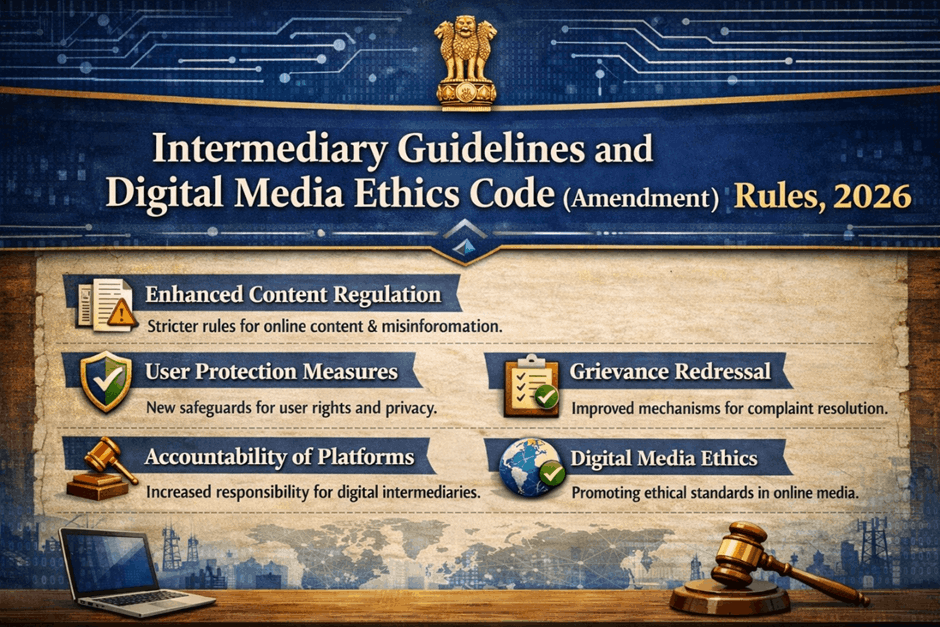
In an era where seeing is no longer believing, the Indian government has taken a decisive step to fortify the digital safety of its citizens. On February 10, 2026, the Ministry of Electronics and Information Technology released a crucial notification: the Information Technology (Intermediary Guidelines and Digital Media Ethics Code) Amendment Rules, 2026.
For the average internet user, legal documents can often feel dense and distant. However, this amendment is not just bureaucratic paperwork; it is a direct response to the explosion of Artificial Intelligence (AI) and the growing menace of “Deepfakes.” It is a regulatory firewall designed to protect your identity, your privacy, and the truth itself.
The “Why” Behind the Move: From Bollywood to Your Living Room
To understand why this is necessary, we must look at the recent digital landscape. We have seen landmark court judgements protecting the “personality rights” of icons like Amitabh Bachchan and Jackie Shroff. The courts ruled that their voices, images, and mannerisms could not be used commercially without consent. But what about the common man? What happens when a schoolteacher, a small business owner, or a student has their face swapped onto an objectionable video?
These amendments democratize that protection. They acknowledge that in the age of “Synthetically Generated Information” (the legal term used for AI content), every Indian citizen deserves the same protection against digital impersonation that a Bollywood superstar gets. This aligns with the broader global and national discourse on privacy, echoing the concerns often raised in cases involving platforms like WhatsApp regarding the origin and spread of misinformation.
“When technology can steal your face, your voice, and your identity, protection can no longer be optional it must be guaranteed.”
Dr Subroto Kumar Panda, CIO, Anand and Anand
What is “Synthetically Generated Information”?
The new rules introduce a clear definition for this term. It refers to audio, visual, or audio-visual content that is artificially created or modified to appear real—essentially, deepfakes.
Crucially, the government has ensured that this doesn’t hurt creativity. If you are just doing routine photo editing, colour correction, or making a PowerPoint presentation, you are safe. The rules specifically target content that tries to deceive or mimic reality.
Impact on the Common Man: Your Identity is Yours
For the Aam Aadmi, these rules are a safety net. The amendment explicitly prohibits the use of AI to falsely depict a person in a way that deceives others about their identity, voice, or conduct.
- Privacy Protection: If someone uses AI to create non-consensual intimate imagery (deepfake pornography) or invades your bodily privacy, platforms are now legally mandated to stop it.
- Swift Action: The amendment drastically reduces the time platforms have to act. For certain sensitive violations, the response time for removal has been slashed from 36 hours to just three hours. This is a massive win for victims of cyber-harassment, where every second counts.
Impact on Intermediaries (Social Media Platforms)
For tech giants (Intermediaries), the era of “passive hosting” is over. The “safe harbor” protection—which shields them from liability for user content—is now tighter.
- Mandatory Labelling: Platforms must now ensure that AI-generated content is clearly visible and labelled. You, as a user, have the right to know if a video is real or synthetic.
- Invisible Watermarks: Beyond just a visible label, platforms must embed “metadata” or a unique identifier into the AI content. This acts as a digital fingerprint, helping trace the origin of the content—addressing the long-standing “traceability” concerns often debated in privacy cases.
- Strict Verification: Significant social media intermediaries must now ask users to declare if they are uploading AI content and verify these declarations. If they knowingly let fake content slide, they lose their legal immunity.
Impact on Business Houses
For the corporate world, this is a safeguard against fraud. We have seen global instances where AI audio was used to mimic a CEO’s voice to authorize fraudulent money transfers.
- Preventing Fraud: The rules ban synthetic information that results in the creation of a “false document” or “false electronic record”. This provides a legal basis for prosecuting AI-driven corporate espionage and financial fraud.
- Brand Safety: Companies can now better protect their brand ambassadors and leadership from being misrepresented in unauthorized AI advertisements.
Impact on Schools and Education
Educational institutions are increasingly digital, and unfortunately, students are often vulnerable to cyberbullying.
- Safety for Students: By strictly prohibiting content that is “obscene, pornographic, paedophilic” or “invasive of another person’s privacy” , and mandating a 3-hour removal window, the rules provide schools and parents with a powerful tool to protect children from deepfake bullying.
- Educational Exemption: The rules are nuanced enough to exempt “educational or training materials” from being classified as harmful synthetic info, ensuring that legitimate e-learning tools are not hindered.
Conclusion: A Step Toward a Trustworthy Internet
The Information Technology Amendment Rules, 2026, are not just about restriction; they are about restoration—restoring trust in what we see and hear online. By holding platforms accountable, mandating transparency through labeling, and speeding up the removal of harmful content, the government has created a robust framework.
It connects the dots between the high-profile “personality rights” judgements of film stars and the privacy rights of the common user. In a world where AI can fake reality, these rules ensure that the law remains real, active, and protective for every Indian citizen.
Author : Dr Subroto Kumar Panda, CIO, Anand and Anand