


As hybrid and multi‑cloud adoption surges, fragmented tools, talent shortages, and machine‑speed threats are straining enterprise security teams worldwide.
A new global study by Fortinet has revealed a widening “complexity gap” in cloud security, driven by fragmented tools, understaffed teams, and AI‑driven threats moving faster than human defenses. The 2026 State of Cloud Security Report, produced in collaboration with Cybersecurity Insiders, surveyed more than 1,160 cybersecurity leaders across industries and regions and the findings paint a troubling picture of escalating risk in an era of hybrid and multi-cloud dominance.
The core insight is simple but alarming: cloud environments are scaling at a speed security teams cannot match. As organisations expand to new platforms, services, applications, and geographies, the security structures meant to protect them are struggling to keep pace. This mismatch—between the velocity of cloud growth and the capacity of security teams—is what Fortinet calls the “complexity gap.”
The Three Forces Behind the Complexity Gap
Fortinet’s analysis identifies three primary factors reinforcing this widening divide.
Fragmented Defences and Tool Sprawl
As cloud adoption accelerates, organisations are deploying security tools faster than they can integrate them. Each cloud platform AWS, Azure, Google Cloud, Oracle Cloud, and private cloud environments brings its own controls, dashboards, APIs, and operational models. The result is a patchwork of point solutions that rarely work together.
Nearly 70% of organisations surveyed say tool sprawl and visibility gaps are their biggest obstacles to effective cloud security.
Security operations teams today must manually correlate alerts generated by systems never designed to function as one. This leads to blind spots, inconsistent enforcement, duplicate efforts, and slower incident response.
Disconnected tools don’t just reduce efficiency they directly increase risk. In modern cloud environments, where microservices and containers can spin up and down within minutes, security must be both automated and unified. Instead, many organisations find themselves overwhelmed by a labyrinth of dashboards and alerts.
“Cloud environments are evolving faster than most security teams can keep up with… Closing this gap requires a more unified approach to cloud security.”
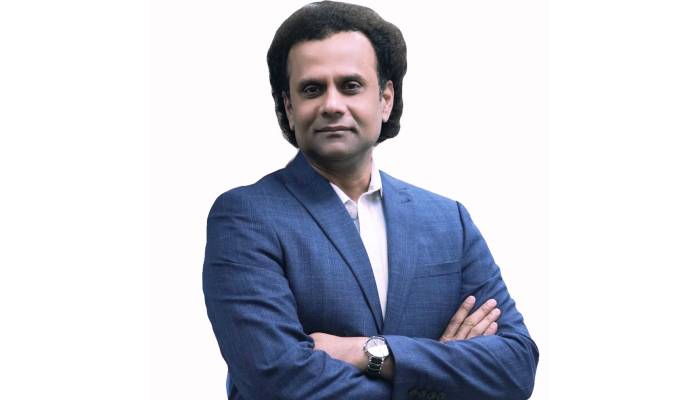
— Vishak Raman, VP of Sales, India, SAARC, SEA & ANZ, Fortinet
Overworked and Understaffed Cybersecurity Teams
Technology fragmentation is only half the story. The other half is the global shortage of skilled cybersecurity professionals a problem now reaching critical levels.
According to the report:
- 74% of organisations face an active shortage of qualified cybersecurity staff.
- 59% admit they are still in the early stages of cloud security maturity.
This double burden immature security practices and insufficient manpower creates a “gap within the gap.” Even well‑designed cloud architectures cannot be secured effectively without the right expertise.
Security teams today are required to understand:
- distributed cloud networking
- identity and access management across multi-cloud
- Kubernetes and container security
- cloud-native application protection
- API-level protections
- AI-driven detection systems
But with limited staff and ever-expanding responsibilities, teams are forced into reactive firefighting rather than proactive planning. This often results in slow response times and missed high‑priority alerts.
Machine-Speed Threats Driven by Automation and AI
The most urgent catalyst widening the complexity gap is the shift in attacker behavior. Threat actors today use automation, scripting, and AI to scan cloud environments at unprecedented speed.
They can:
- detect misconfigured storage buckets within minutes,
- map permission pathways at scale,
- identify exposed credentials automatically,
- weaponise vulnerabilities before patches are widely applied.
In this new threat landscape, the detection-to-exploit window has shrunk dramatically.
It is unsurprising then that 66% of respondents lack confidence in their ability to detect and respond to cloud threats in real time.
Cloud attacks are no longer initiated by human hackers manually probing for weaknesses they are launched by machines programmed to find vulnerabilities faster than defenders can react. This reality places tremendous pressure on organisations still relying on manual processes or disconnected tooling.
Hybrid and Multi-Cloud: The New Normal And the New Challenge
Cloud complexity is not merely an abstract problem it is the predictable result of a global shift toward hybrid and multi-cloud ecosystems.
According to the report:
- 88% of organisations now operate in hybrid or multi‑cloud setups (up from 82% last year).
- 81% run critical workloads across two or more cloud providers (up from 78%).
- 29% use three or more cloud providers.
These architectures promise flexibility, resilience, cost optimization, and vendor diversification. But they also introduce a spiderweb of identities, permissions, data flows, API endpoints, and attack surfaces.
For example: A single business process might involve SaaS tools, private cloud workloads, public cloud compute, distributed users, and third-party APIs all interacting at once. Securing such a system requires unified visibility and real-time monitoring across every layer. Yet most organisations are still juggling siloed controls. As cloud workloads scale, the infrastructure becomes harder to understand, harder to monitor, and harder to secure.
Cloud Growth = Attack Surface Growth
A powerful theme emerges from Fortinet’s findings: cloud growth and attack surface growth are now inseparable. Every new cloud service, identity, workload, or integration adds complexity and therefore risk.
Misconfigurations, excessive permissions, unmanaged identities, and unmonitored API calls are now the leading causes of cloud breaches across industries. The challenge is not simply identifying these weaknesses it is doing so in environments that change every minute.
Cybersecurity teams are essentially securing a moving target, with limited tools and shrinking timeframes.
The Shift Toward Unified Security Ecosystems
Given the challenges highlighted in the report, it is clear enterprises are rethinking their cloud security strategy. The most notable trend is the movement toward platform consolidation.
If starting from scratch today:
- 64% of respondents would choose a single‑vendor platform to manage network, cloud, and application security together.
This marks a decisive break from the industry’s earlier approach of stacking multiple best‑of‑breed point solutions. Organisations are recognizing that integration overhead, inconsistent data models, and operational friction are untenable in the long term.
A unified ecosystem offers:
- consistent policies across clouds
- coordinated threat detection and response
- shared data models for better visibility
- simplified operations
- reduced alert fatigue
- built-in automation for machine-speed defense
In short, consolidation is not only about reducing cost or complexity; it is fundamentally about boosting resilience and enabling more proactive threat management.
Reshaping Cloud Security for the AI Era
AI features prominently in this year’s report not only as a threat force multiplier, but also as a critical tool for defenders.
Fortinet emphasises that organisations pursuing AI strategies must strengthen cloud security first. AI initiatives depend on reliable, secure, and well-governed cloud environments; otherwise, they risk amplifying vulnerabilities instead of solving them.
Security programs of the future must address:
- hypergrowth of cloud assets
- team capacity constraints
- fragmentation of controls
- real-time threat dynamics
- identity complexity
- AI-driven adversaries
This requires a shift from reactive to predictive security, driven by automation, intelligence, and unified visibility.
Expert View: Closing the Gap
Vishak Raman, Vice President of Sales for India, SAARC, SEA & ANZ at Fortinet, summarises the urgency clearly: “Cloud environments are evolving faster than most security teams can keep up with, especially as AI accelerates both innovation and risk.”
He adds: “While attackers are operating at machine speed, many organisations remain dependent on manual processes and fragmented visibility. Closing this gap requires a unified approach to cloud security that enables faster insight, coordination, and response.”
His comments reflect the central theme of the report: the future of cloud security lies in unification, automation, and integration not in more tools, more dashboards, or more manual oversight.
Conclusion:
The 2026 Cloud Security Report highlights an industry at a crossroads. As cloud adoption accelerates and AI reshapes both offense and defense, the complexity gap threatens to widen further.
For organisations worldwide, the path forward is becoming clear: Simplify. Consolidate. Automate. Integrate.
Only then can enterprises gain the visibility and agility needed to defend against machine-speed threats in an environment defined by continuous change.